Tuesday, 2 August 2011

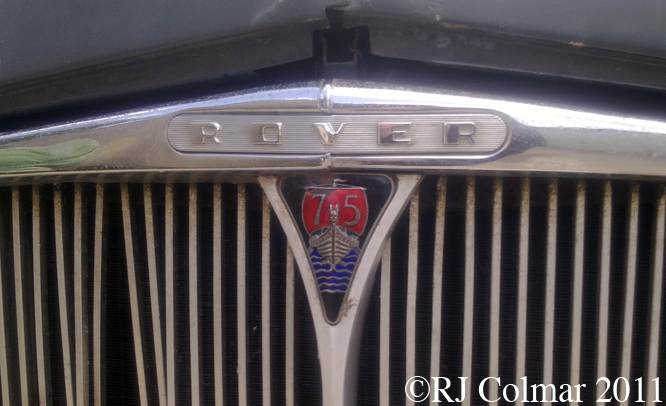
Awaiting TLC #2 - Rover 75 P4

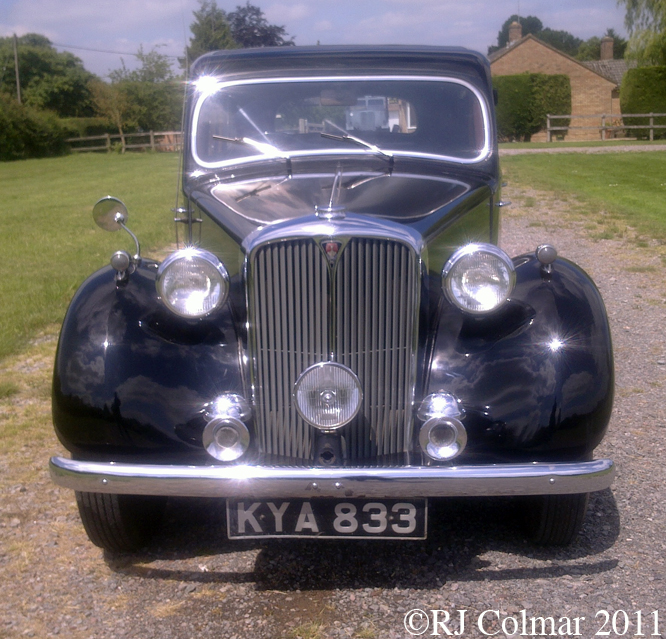
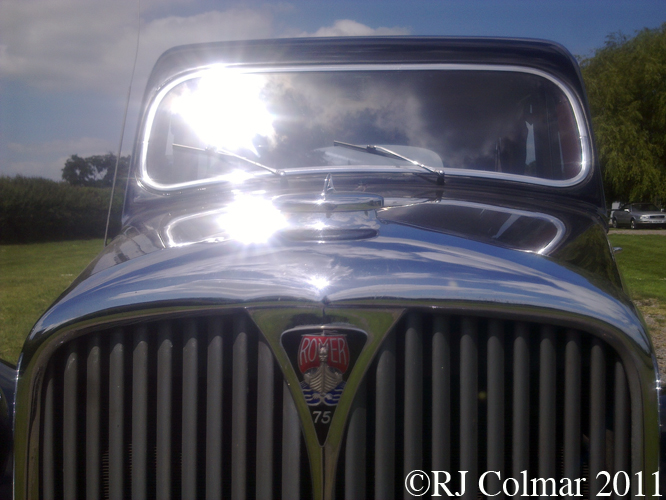
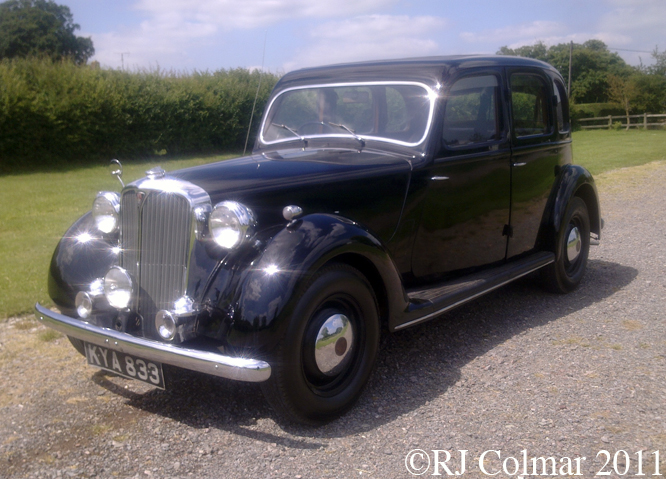
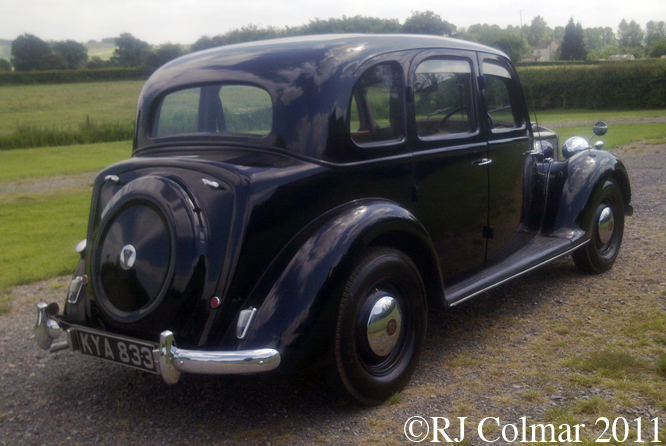
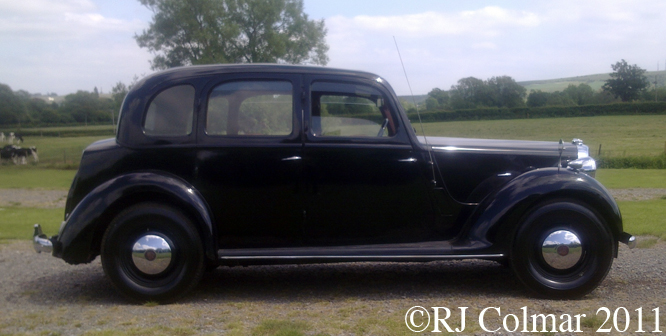
The Rover P4 range of vehicles was introduced in 1949 to replace the interim out dated P3 vehicles which had been rushed into production in 1948 as the Rover company sort to rebuild itself as a vehicle manufacturer having spent the years during World War 2 manufacturing aircraft.

Rover P4 75, Atwell Wilson MM

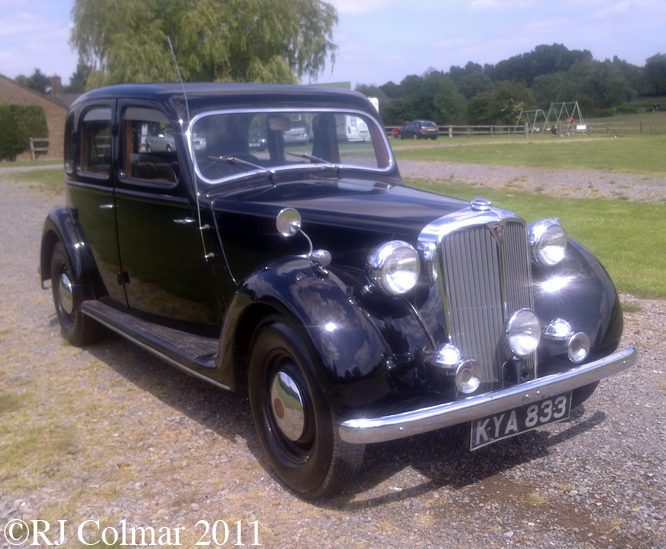
Drawing inspiration from the 3rd generation Raymond Loewy designed Studebaker Champion launched in 1946, at the request of the Wilkes brothers who owned Rover, Gordon Bashford was responsible for what was known in the factory as the P4. The original P4's came fitted with a central spot lamp mounted in the grill, but this feature was dropped early in production which eased the difficulties keeping the engine cool.
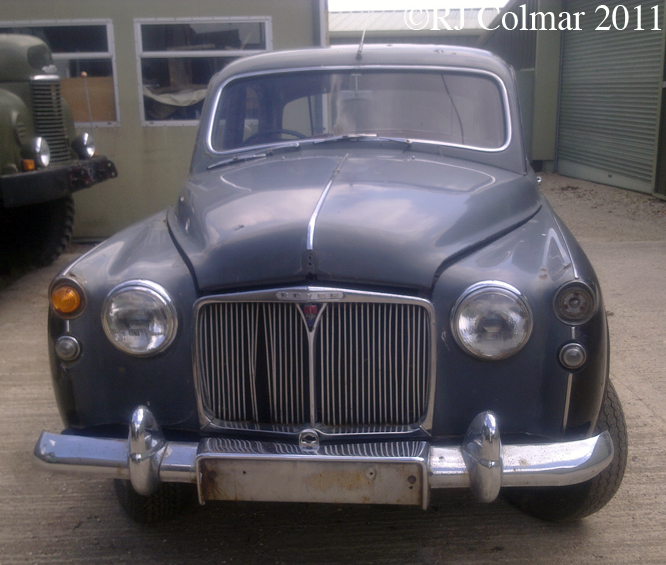
Rover P4 75, Atwell Wilson MM

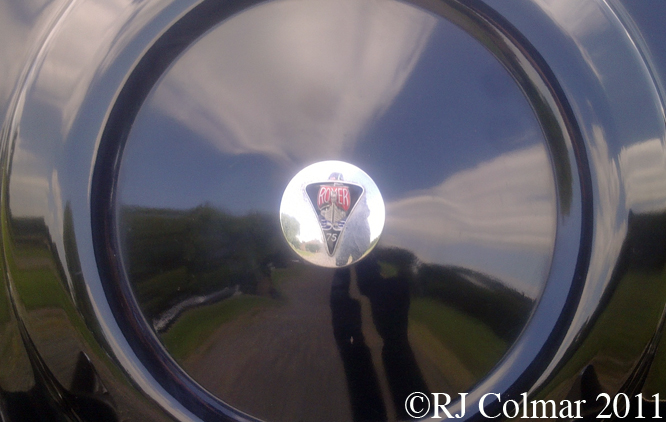
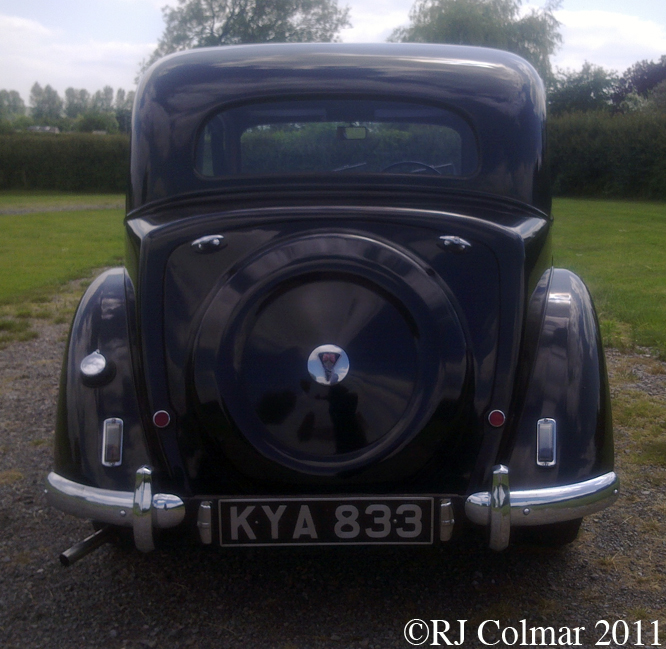
The P4 was continually being upgraded and from 1954 a distinct MkII version was available that was then restyled again into the form shown in these photo's in 1957, a Mk 2.2 if you will.
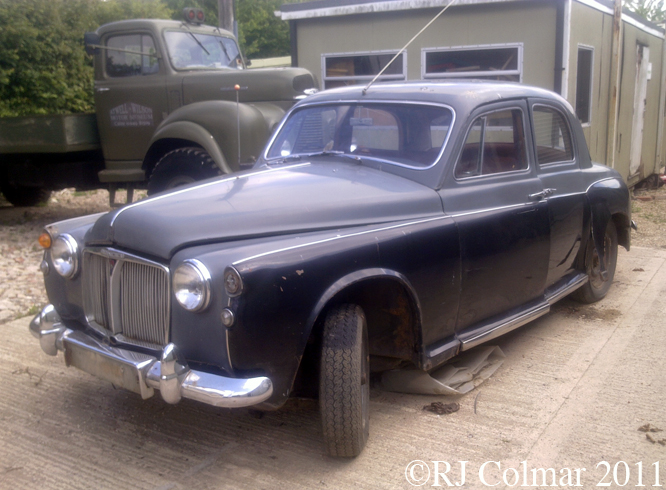
Rover P4 75, Atwell Wilson MM

Because of material shortages immediately after WW2 these vehicles incorporated a high percentage of aluminium content and were to be seen in competitions of the day including the 1955 Mille Miglia in which Lando Barsotti brought his #347 Rover 75 P4 in 271st. The 75 seen here was powered by a 2.2 litre /136 cui 6 cylinder motor featuring the same overhead inlet valves and side exhaust valve design as had been a feature of the earlier P3.
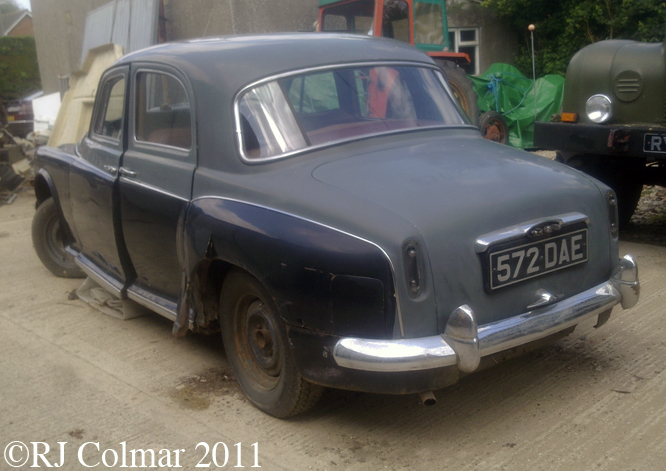
Rover P4 75, Atwell Wilson MM

The final MK II P4's were produced in 1959 with 9,974 Mk II's produced over it's five year production run.

I spotted this particular vehicle at the back of the Atwell - Wilson Motor Museum. I am not sure what they planned to do with it, good working examples of the type tend not to fetch more than £ 2000 so the cost of restoration would appear to be a little prohibitive.

Thanks for joining me on this Awaiting TLC edition of 'Gettin' a lil psycho on tyres', I hope you will join me again tomorrow. Don't forget to come back now !

Monday, 1 August 2011

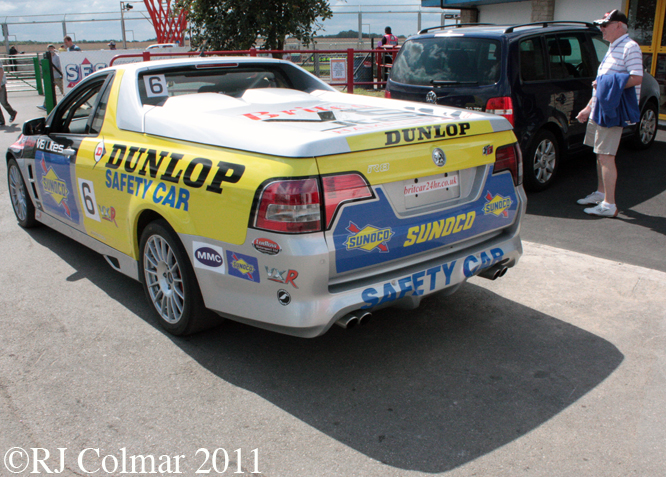
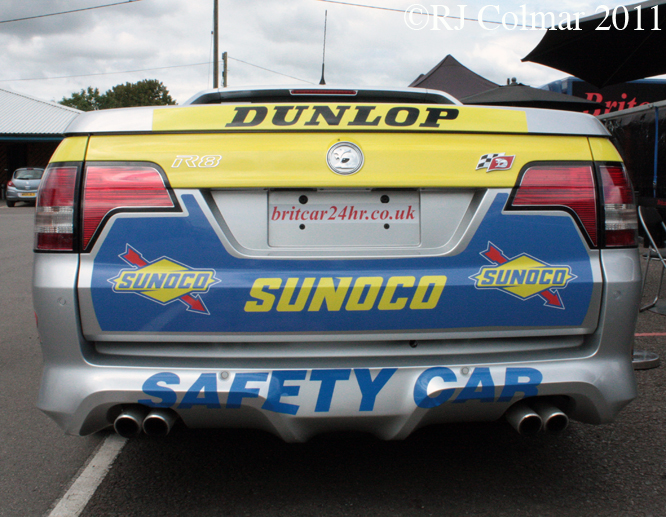
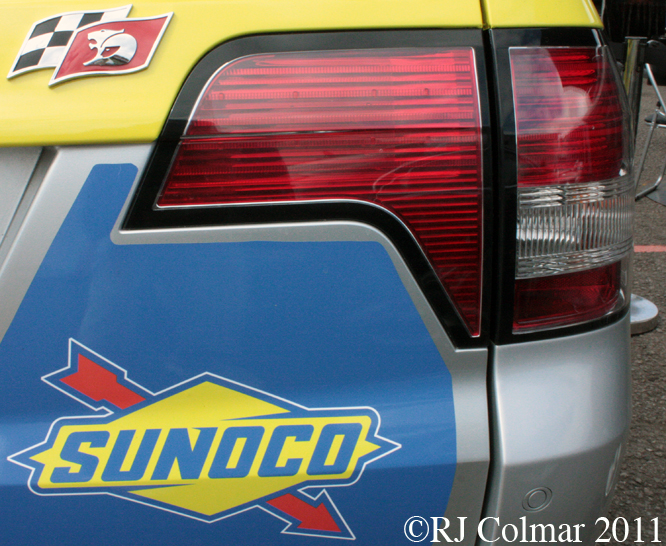
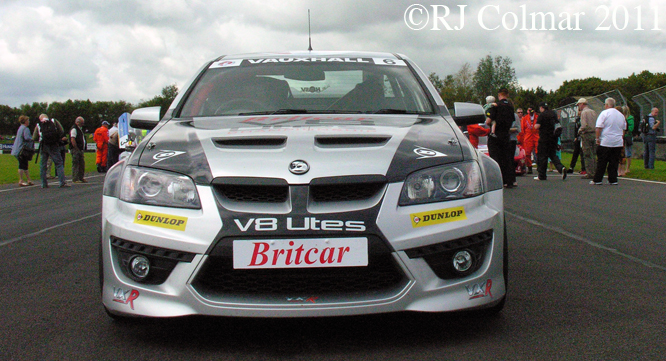
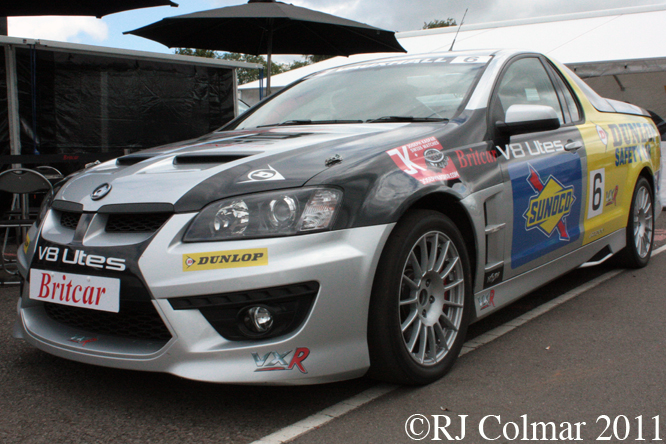
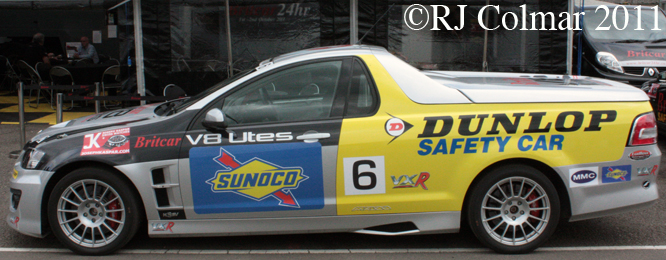
Racing Maloo - HSV Maloo

Two weeks after starting the 'Gettin' a lil' psycho on tyres' blog I remember getting a huge thrill from discovering an HSV Maloo on the streets of Bristol and learning that it was the fastest pickup truck in the world.

HSV Maloo R8, Castle Combe

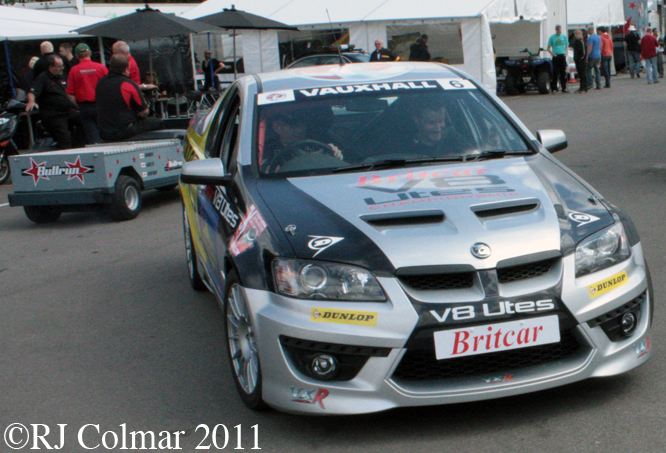
Last weekend while at the Britcar British Endurance Championship Racing Weekend at Castle Combe I stumbled across another Maloo this time in full race trim including

HSV Maloo R8, Castle Combe

slick tyres to compliment it's 400 hp Corvette LS2 engine which according to one passer by in a Britcar T shirt is tuned to 600 hp good for reaching 60 mph in under 4 seconds.

HSV Maloo R8, Castle Combe

When I got home I was surprised to learn that there is an Australian racing series for Ford and Holden pick ups, where pickups are known as Utes, which is part of a staircase to find talent for the top tier Australian V8 Supercar series.

HSV Maloo R8, Castle Combe

Even more surprisingly I have found out that late last year an announcement was made by Britcar to the effect that they would organise a debut season for a UK V8Ute Series using only the rebranded Vauxhall VXR Maloo pickup model.

HSV Maloo R8, Castle Combe

The cars were to be rented from Britcar with the rental cost including entry fees for a full season of races.

HSV Maloo R8, Castle Combe

The plan was that at each meeting the Maloo's would take part in three 40 minute races with mandatory pit stops for driver changes.

HSV Maloo R8, Castle Combe

The projected series is on temporary hold, I look forward to an announcement from Britcar that the series will get a chance to go public and from Vauxhall that the VXR Maloo gets the opportunity to enter the UK market place.

Thanks for joining me on this Antipodean Racing edition of 'Gettin a lil' psycho on tyres' I hope that you will join me again tomorrow ! Don't forget to come back now !

Sunday, 31 July 2011

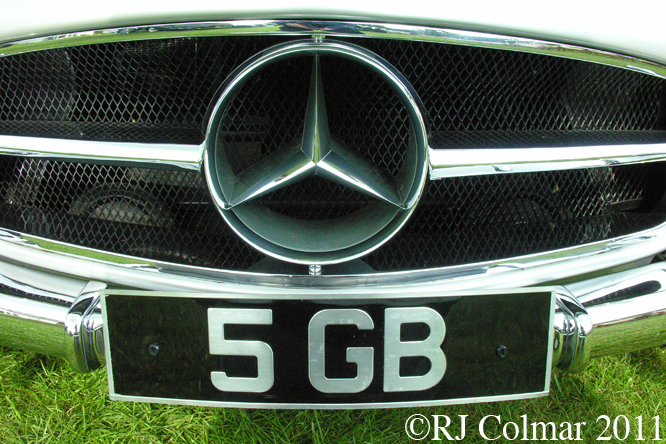
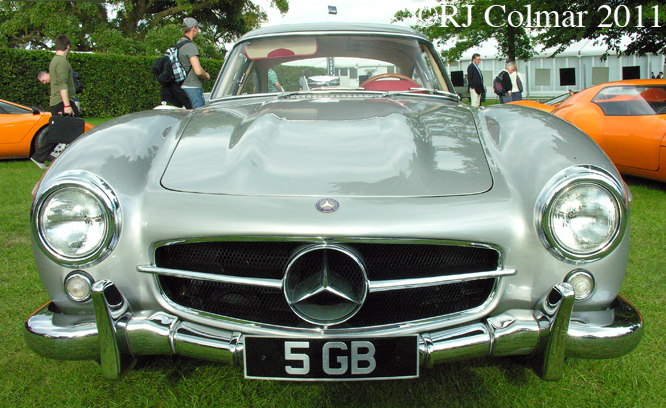
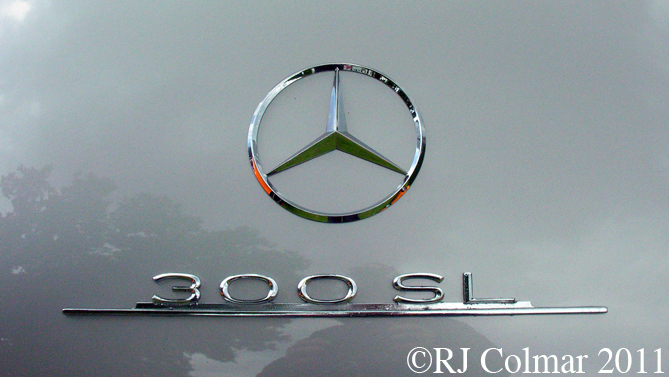
Direct Injection Of Kudos - Mercedes Benz 300 SL

In 1952 the underpowered 115 hp carburettor 3 litre / 183cui Sport Leicht Mercedes Benz W194 demonstrated remarkable versatility by winning the Le Mans 24 hours, the Eifelrennen sports car race at the Nurburgring and the Carrera Panamerica in Mexico racing against more powerful opposition from Ferrari and Jaguar.

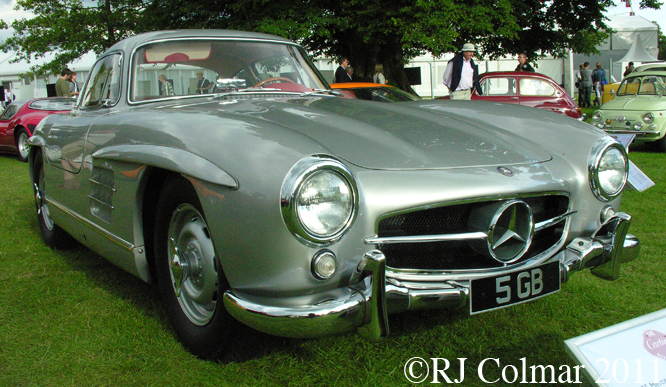
Mercedes Benz 300 SL, Goodwood FoS

These successes lay in the lightweight tubular steel chassis and a low drag body which was facilitated by canting the straight six cylinder motor at a 50 degree angle.

Mercedes Benz 300 SL, Goodwood FoS

New York Mercedes distributor Max Hoffman suggested a road going version of the W194 would make a viable commercial impact in the United States and so the 300 SL was launched in 1954 with a the worlds first mechanical direct injection petrol engine which produced 175 hp.

Mercedes Benz 300 SL, Goodwood FoS

In order to accommodate the high sided tubular steel chassis, designed by Rudolf Uhlenhaut, distinctive aluminium gull wings were used in conjunction with a tilt away steering column to facilitate access.

Mercedes Benz 300 SL, Goodwood FoS

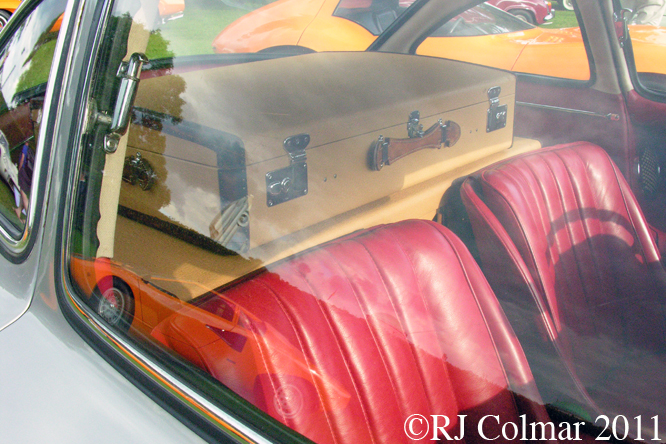
The spare tyre fills the boot / trunk space entirely meaning one had to travel light in the 300SL as demonstrated by the suitcase on the parcel shelf.

Mercedes Benz 300 SL, Goodwood FoS

The 300SL was not without problems derived from it's racing heritage the large volume oil system rarely got up to proper operating temperature on shorter journeys and in turn the oil would get diluted by the mechanical fuel injection by unburned petrol that remained in the cylinders when the engine was switched off. This meant that the 300 SL needed an oil change every 1000 miles.

Mercedes Benz 300 SL, Goodwood FoS

But for all of it's problems the aerodynamic shape of the 300 SL meant that with a 160 mph capability it was easily the fastest road car of it's day when it was launched. 80% of the nearly 1400 units built went to the USA changing the image of Mercedes Benz from staid to sporty overnight forever.

For a look at a contemporary interpretation of the 300 SL checkout Dave Wolin's wild Chevrolet powered 300 SL I blogged about a couple of weeks ago.

If your interested in the pre war silver arrows racing vehicles I strongly recommend a visit to Paul Chenard's Automobiliart website and check out his 'Silver Clouds' illustrated book of the 1934 Grand Prix season.

Thanks for joining me on this Direct Injection edition of 'Gettin' a lil' psycho on tyres' I hope you'll join me again tomorrow. Don't forget to come back now !
Saturday, 30 July 2011

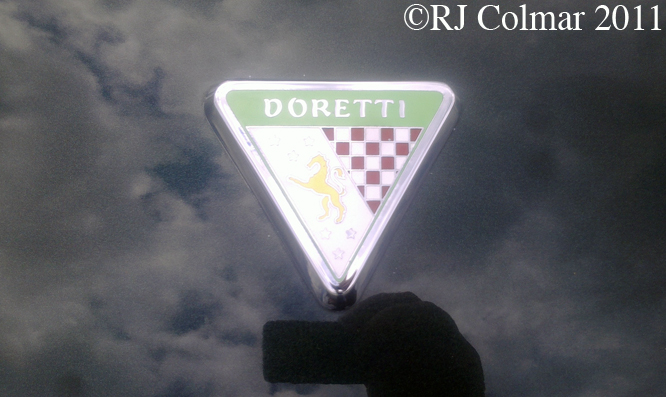
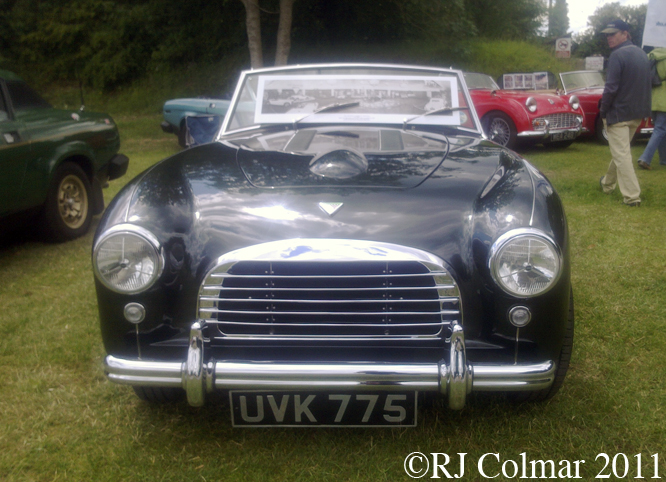
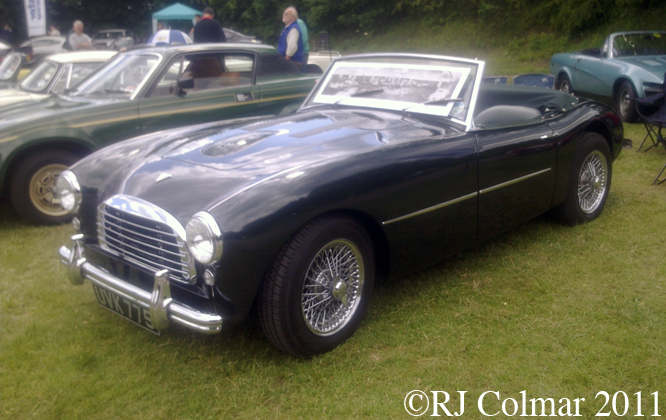
The Lil' Car That Scared The Fat Cat - Doretti #1196

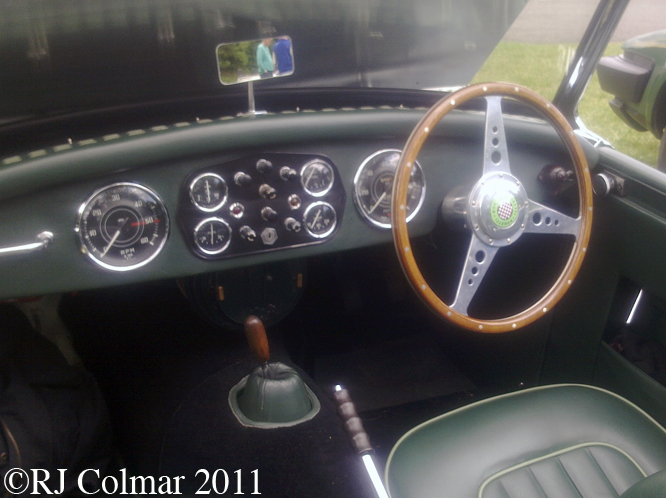
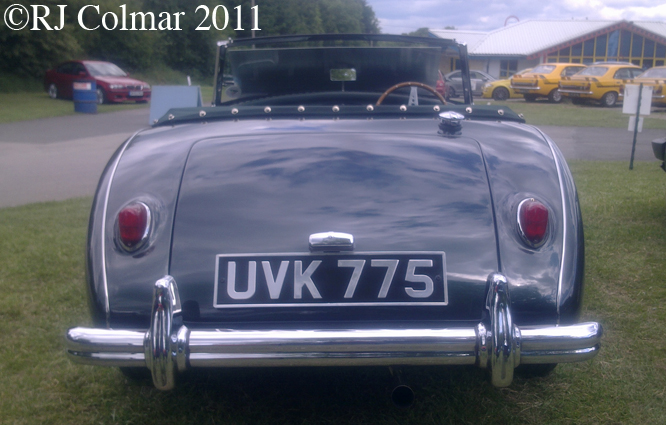
The Doretti was designed by former Bristol Omnibus apprentice Frank Rainbow while he was working for the Tube Investment Group. In January 1953 Frank was given 9 months to design and build the first Doretti car by Eric Saunders, managing director of the Swallow Coachbuilding Company which became part of the TI Group in 1946 after spawning S.S. Cars in 1934 which became Jaguar in 1945.

Doretti, Castle Combe C&SCAD

In 1952 Eric met Arthur Andersen of the Rome Cable Corporation, who was interested in the production of a vehicle specifically designed for sale in the USA and discussion turned to the production of a car to be designed by Frank with bodies to be made in Wales.

Doretti, Castle Combe C&SCAD

Using his connection with Sir John Black at Standard Triumph, Eric Saunders secured a supply of Triumph TR2 running gear for the Swallow Doretti, a name derived from a marketing company operated by Arthur Andersens daughter Dorothy Deen and Paul Bernhart which was to market the car.

Doretti, Castle Combe C&SCAD

Frank completed the first car with a Reynolds 531 chrome-molydenum steel tube chassis on schedule and it was exhibited alongside a Triumph TR2, which Doretti parent Cal Specialities Company was also responsible for distributing.

Doretti, Castle Combe C&SCAD

From 1954 to 1955 around 280 Doretti's were built in a factory with a maximum of just 18 employees.

Doretti, Castle Combe C&SCAD

The success of the Doretti frightened Jaguar, which was by now a large customer of the same TI Group that facilitated the birth of the Doretti, into giving Tube Investments an ultimatum to disengage from the Doretti project or loose the Jaguar account. Doretti production halted overnight on the receipt of the ultimatum and thus the Doretti name lives on in around 180 of the cars that are thought to have survived.

Hope you have enjoyed today's Cal Specialities Company edition of 'Getting a 'lil psycho on tyres' and that you'll join me again tomorrow for a look at another European sports car that changed the image of it's manufacturer forever. Don't forget to come back now !

Friday, 29 July 2011

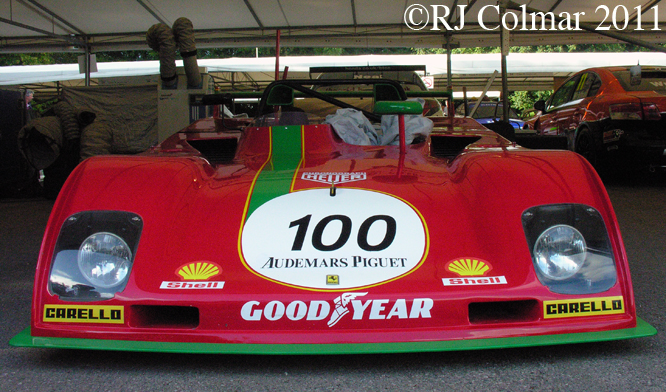
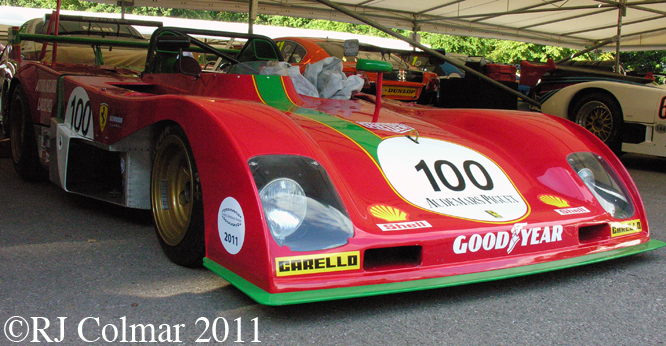
Two Seat Grand Prix Car - Ferrari 312 P #0890

Last week on Ferrari Friday we looked at the catastrophe that befell the Ferrari teams Grand Prix effort as a result of Enzo's illness sabbatical in 1972.

Ferrari 312 P, Goodwood FoS

The story of the Ferrari teams fortunes in sports car racing during this period were not quite so catastrophic but having red washed the World Sportscar Championship of 1972 winning all races except the Le Mans 24 hours, which the team did not enter allegedly because they did not believe their engine would prove sufficiently reliable, 1973 proved to be a disappointment.

Ferrari 312 P, Goodwood FoS

Matra who had only entered, and won, the Le Mans 24 hours in 1972 made a successful bid for the World Sports Car Championship in 1973. While this was by no means as comprehensive a blue wash as Ferrari had achieved the year before.

The absence of 'Fury' Forghieri who had been exiled to the Fiorano test track by FIAT management during Enzo Ferrari's sabatical was tangible in terms of Ferrari's flagging sports car results.

Ferrari 312 P, Goodwood FoS

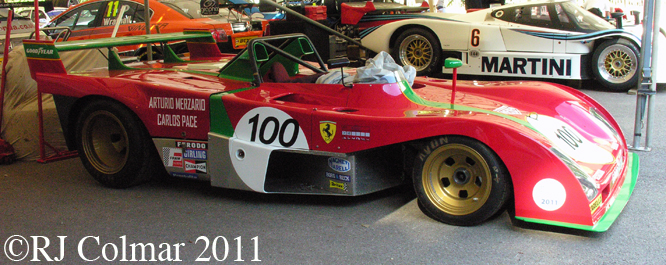
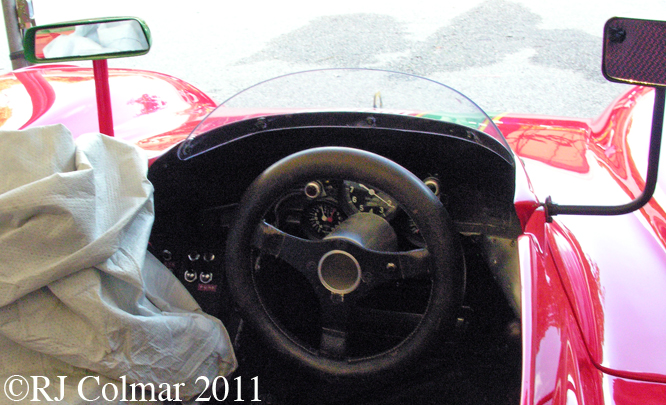
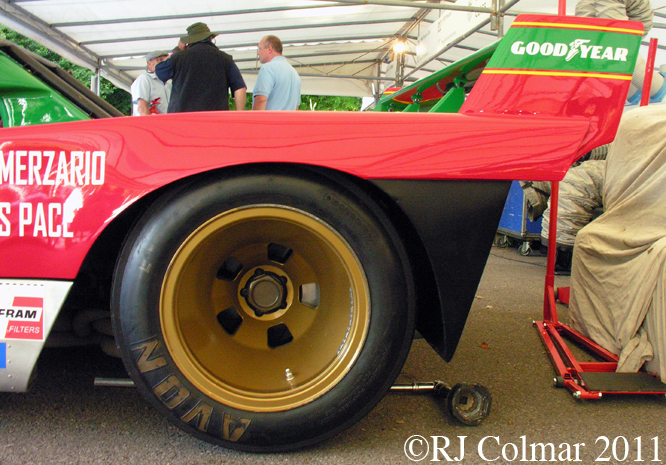
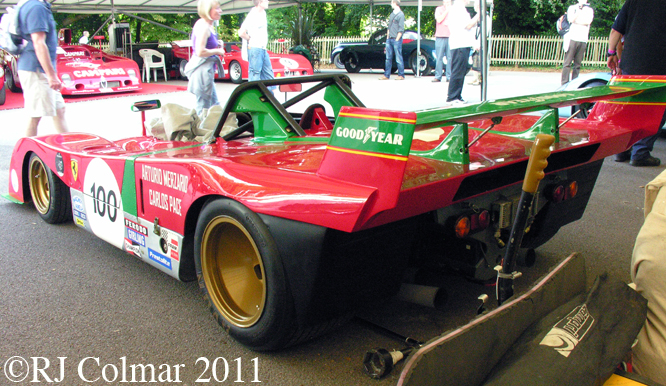
This 1973 spec Ferrari 312 PB chassis #0890 was built for the 1972 season during which Art Mezario and Brian Redman drove the car to victory in the Spa 1000 kms.

Ferrari 312 P, Goodwood FoS

Mezario also drove to a solo non championship victory at Imola in a 500 km race in this chassis, #0890 only disgraced it's self once from six starts in 1972 with an engine failure at Kyalami.

During 1973 #0890 was raced a further five times with 2nd place finishes it's best results at Dijon for Ickx / Redman and at the Nurburgring for Carlos Pace / Merzario a partnership which brought the car a 3rd place in it's final front line race in the 6 hours at The Glen.

Ferrari 312 P, Goodwood FoS

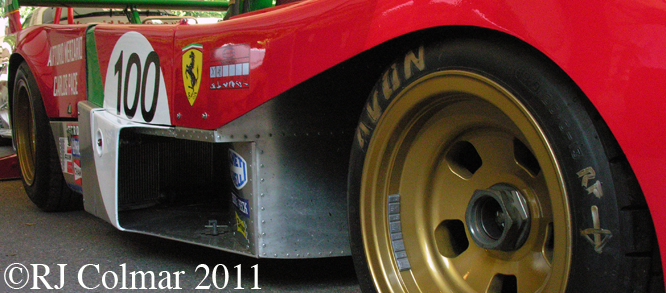
Chassis #0890 seen here at Goodwood Festival of Speed is easily recognisable being the only one of the six 312 P chassis that had the air intake modification to the drivers side chassis skin which appeared at the ADAC 1000 kms at the Nurburgring in 1973.

Ferrari 312 P, Goodwood FoS

In 1972 Ferrari built six 312 P chassis so that there could be a team of three freshly prepared cars at each of the World Championship races. The PB initials were used by the press to distinguish the car from the previous 312 P model of 1971.

Ferrari 312 P, Goodwood FoS

The 1972 Ferrari sports car team managed by Peter Schetty with Ermanno Cuoghi looking after the preparation of the cars was without doubt the class of the field,

Ferrari 312 P, Goodwood FoS

their cars powered by a water cooled 3 litre /183 cui 48 valve flat 12 motor that was in essence a Grand Prix engine detuned for reliability. Five of the six 312 P chassis originally built in 1972 are known to exist today.

Thanks for joining me on today's PB edition of 'Gettin' a lil' psycho on tyres' and I hope that you will join me again tomorrow. Don't forget to come back now !
Thursday, 28 July 2011

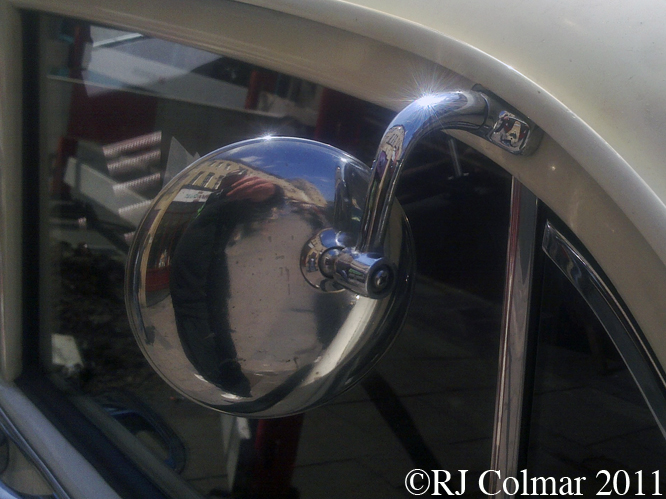
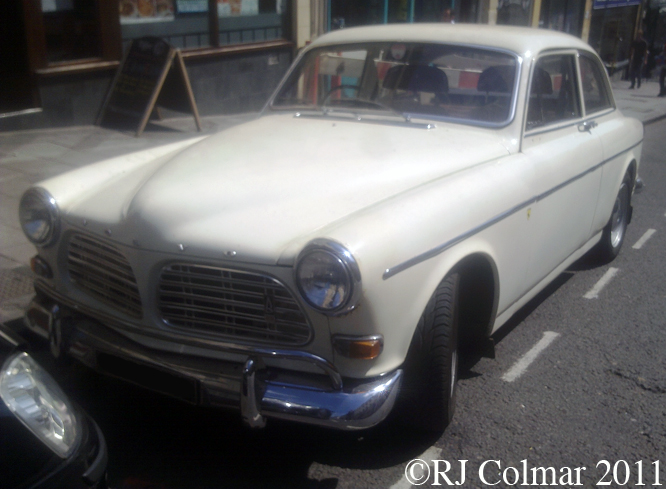
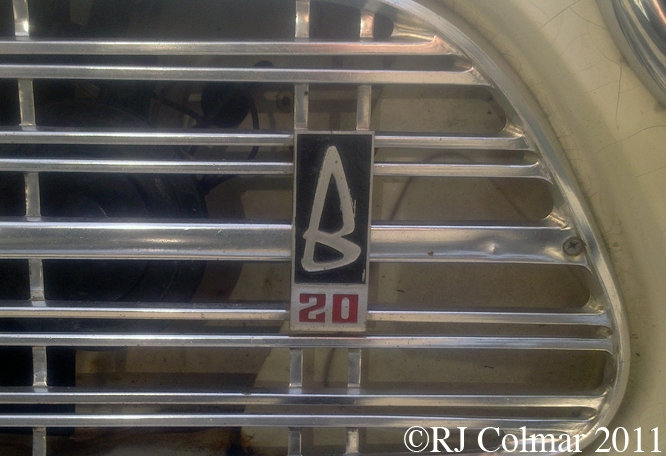
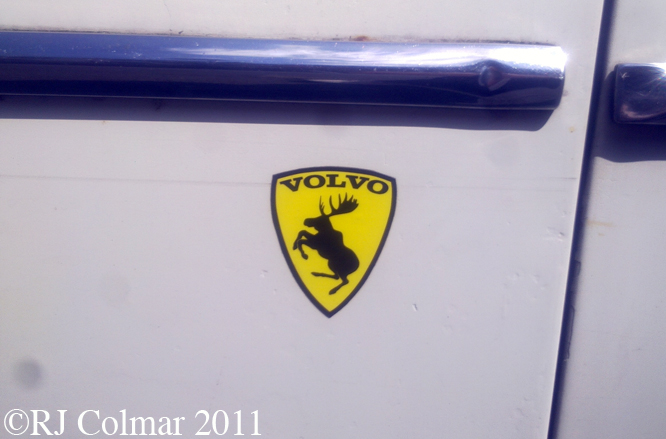
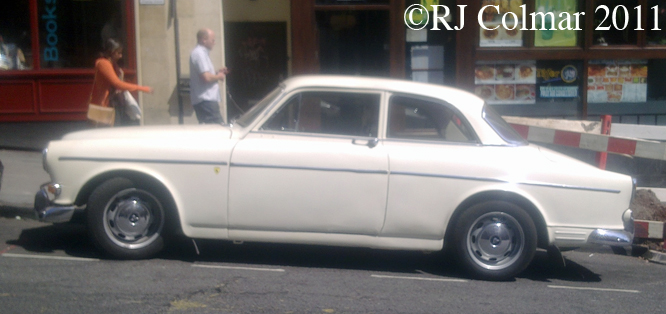
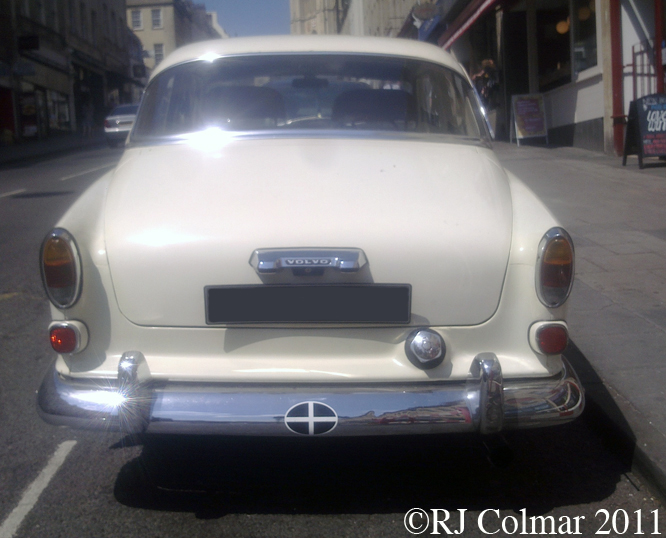
Design Mash Up - Volvo 120 Amazon (131)

Looking back it is a sobering thought that when my four grand parents were born at the turn of the 20th century the invention of motorcar was somewhere between 10 and 15 years old and of them neither of my grand mothers ever learned to drive and only one of my grandfathers ever owned a private car and that only for five years before he died aged 63.

Volvo 120 Amazon (131)

Nearly 60 years later I on the other hand was lucky enough to be born into the age of mass consumption by the time I was just four my parents not only had their first new car but all of their friends had new cars too !

Volvo 120 Amazon (131)

Of those friends my parents had I soon adopted two, Ted and Syd, as my Uncles, both drove brand new grey 2 door Volvo 120 Amazons which had a factory code 131 denoting 2 door single carb versions.

Volvo 120 Amazon (131)

Volvo's original intention was to call the model Amason, however manufacturers, of one of the most irritating sounding 2 strokes ever, Kreidler already had the Amason name registered and so the name Volvo Amason was restricted to Sweden by agreement.

Volvo 120 Amazon (131)

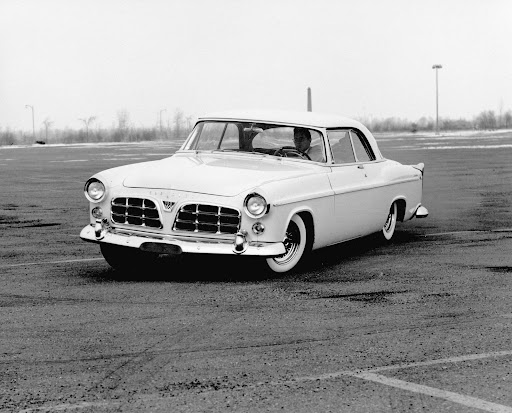
In today's parlance the Amazon design would probably known as a design mash up with the bonnet lines seemingly inspired by the 2nd generation Chrysler New Yorker, the grill design seemingly from the 1955 Chrysler C-300 though designer Jan Wilsgaard claims he was inspired by a Kaiser Manhattan he saw in the docks in Gothenburg. Interesting strap line for the linked Kaiser advertisement in the light of Volvo's reputation from 1959 until the late 1990's.

Volvo 120 Amazon (131)

During a production run of over 600, 000 units produced in Sweden, Belgium, Canada, South Africa and Chile from 1956 to 1970, in 1959 the Amazon became the first car to be fitted with three point front seat belts as standard. The seat belts fitted in Uncle Ted & Syds cars encouraged my folks to get some after market seat belts for our more modest Austin A40 Countryman, an act that probably saved their lives a year or two later when we were involved in a 30 mph collision with the side of a truck.

Volvo 120 Amazon (131)

After 3 years of abuse at BBQ's on the beaches of Larnica, Cyprus most Sundays and nearly 25 years further good service the last time I saw Uncle Syds Amazon it was rapidly deteriorating into a rust bubble in the mid 1980's despite the fact that the engine was other wise mechanically sound. The 1970 model shown here seems to have faired considerably better.

Thanks for joining me on this Amason edition of 'Gettin a lil' psycho on tyres' I hope you will join me again tomorrow. Don't forget to come back now !
Wednesday, 27 July 2011

Interim Model - Rover 75 P3

In 1878 the Rover Company was founded as Starley & Sutton Co. of Coventry which by 1885 had developed the template for the modern bicycle in the form of the Rover Safety Bicycle.

Rover 75 P3, Atwell Wilsom MM

From 1904 still using the Rover Marque brand the company started building motor cars and motorcycles.

Rover 75 P3, Atwell Wilsom MM

After World War 2 Rover moved to it's Solihull factory where it had engaged in building aircraft for the war effort, since it's car plant in Coventry had been wiped out by bombing during the hostilities. The interim P3, launched in 1948, was Rovers first post war model.

Rover 75 P3, Atwell Wilsom MM

The Rover 75 version of the P3 was powered by a novel new six cylinder motor that featured overhead inlet valves and side exhaust valves that had been developed prior to the commencement of hostilities in 1939.

Rover 75 P3, Atwell Wilsom MM

The styling combined elements of the pre war Rover 12 and 16 but only the Rover 12 wings and bonnet were carried over from the narrower earlier designs.

Rover 75 P3, Atwell Wilsom MM

The unitary monocoque design, requiring no independent chassis, featured independent front suspension and hybrid hydraulic / mechanical brakes.

Rover 75 P3, Atwell Wilsom MM

This the 75 body style seen here was known as a light six saloon and cost a relatively expensive £1106, £ 26 more than the similar 4 cylinder 'Sports Saloon' known as the Rover 60.

Rover 75 P3, Atwell Wilsom MM

From 1948 - 1949 7,837 Rover 75's were produced before the all new P4 vehicle was introduced.

Rover 75 P3, Atwell Wilsom MM

The engine and gearbox of the P3 formed the basis of the very first agricultural all terrain 'Land Rover' conceived in 1947. Note the vehicle above built in times of material austerity features a cyclops third head light but only one wing mirror.

This particular P3 can be seen at the Atwell Wilson Motor Museum in Calne.

Thanks for joining me on this 'overhead and side valve' edition of 'Gettin' a lil psycho on tyres', I hope you'll join me again tomorrow. Don't forget to come back now !