Friday, 5 August 2011

Ferrari Turned Ugly - Ferrari 312 P #0876 ?

Some months ago I said that after Niki Lauda tested the proposed Ferrari 312 P sports prototype for 1974 he advised Enzo Ferrari that if he wanted to win the World Formula One Championship that he ought to drop the Sports Prototype Programme.

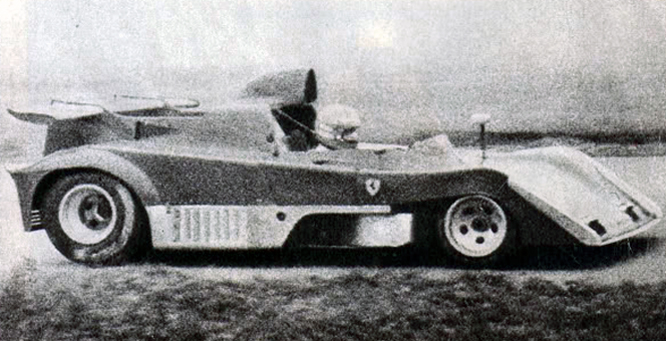
Ferrari P312 #0876 ?

(Ferrari 312 P 1974 Spec, Copyright holder unknown image will be correctly credited or removed upon request.)

The photo above shows Niki Lauda testing the 1974 312 P that is thought to be the work of Mauro 'Fury' Forghieri who simultaneously was working on turning the Formula One Ferrari 312 B3 into a competitive proposition.

It has emerged that it was more likely that Niki and Luca de Montemezolo between them successfully convinced Mr Ferrari that continuing the sports prototype programme was not a good idea.
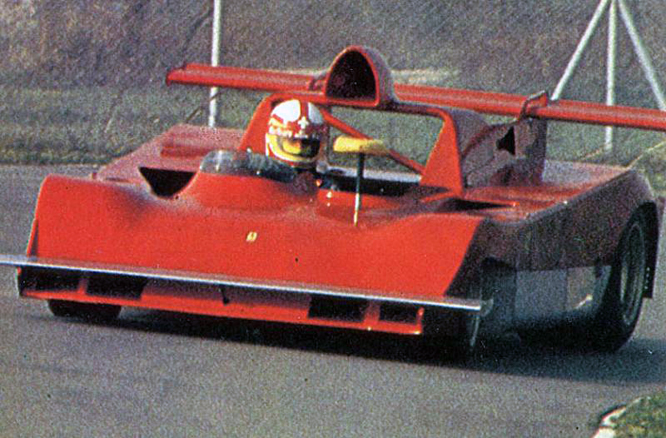
Ferrari P312 #0876 ?

(Ferrari 312 P 1974 Spec, Copyright holder unknown image will be correctly credited or removed upon request.)

As can be seen above even after the alleged advice and Lauda's test drive, the car, seen here with Niki's team mate Clay Regazzoni at the wheel, was developed further with the wide front wing being added before the car was dropped and plans to enter the World Sportscar Championship were abandoned.

It would appear 1974 spec 312 P was based on a short wheel base 1971 312 P chassis, probably #0876, this car, with it's even more distinctive driver side cooler arrangement, than we saw in last weeks 1973 312 P blog, was never raced and has not ever been seen in public.

It is thought likely the car got destroyed on the orders of Enzo Ferrari early in 1974 before the Italian Tax Authorities were due to pay Mr Ferrari a visit.

My thanks to everyone on the 1974 Ferrari 312PB 'evo' thread at The Nostalgia Forum who contributed to this blog.

Hope you have enjoyed today's Ugly Sister edition of 'Gettin' a lil' psycho on tyres', and that you will join me again, tomorrow. Don't forget to come back now !

Thursday, 4 August 2011

Giant Killing Potential ? - Jedi Mk4

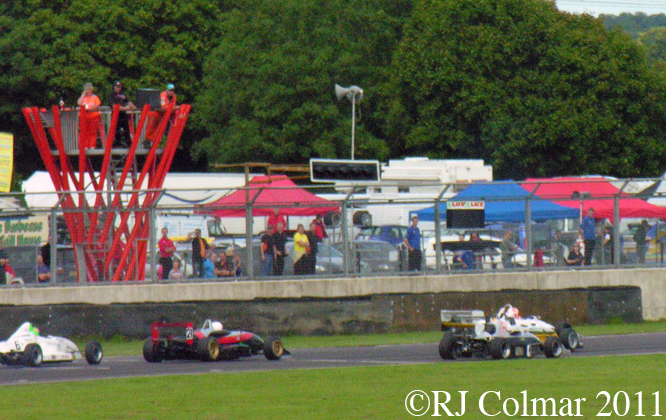
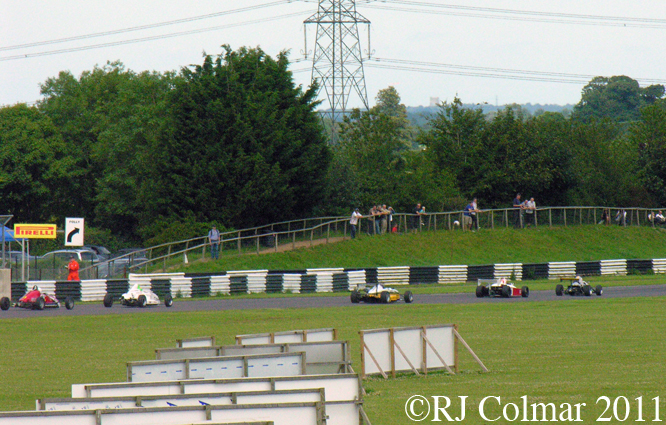
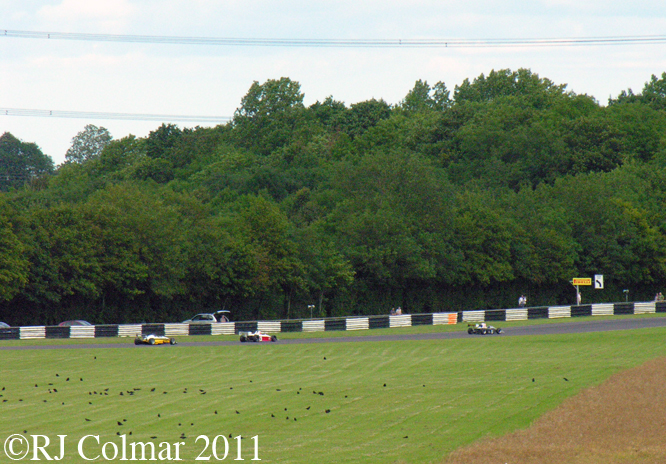
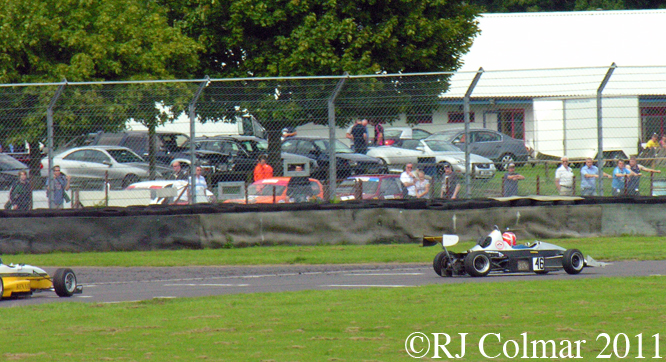
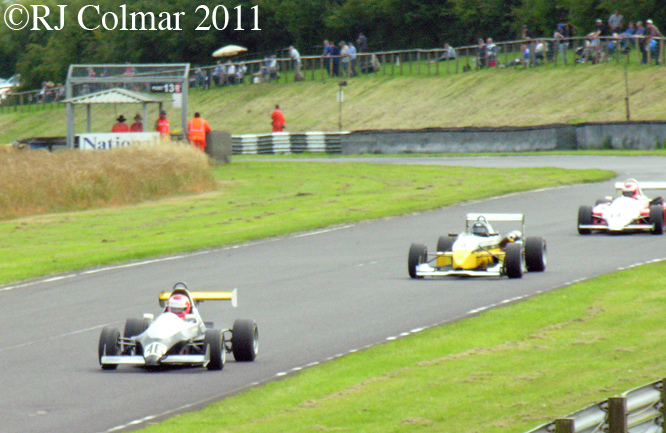
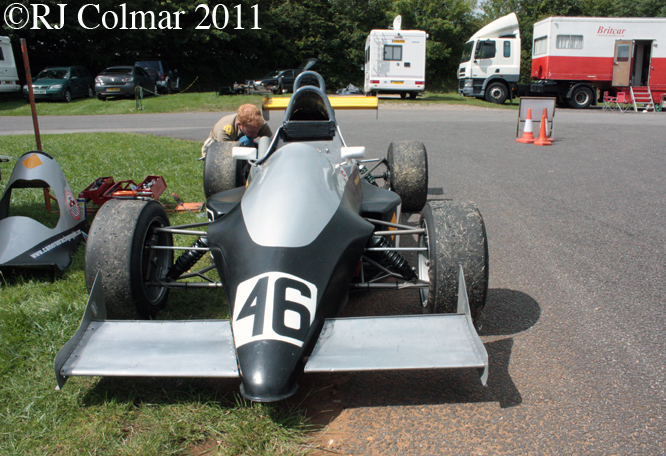
Today we are looking at a Jedi Mk4 run by 2 time 1000 cc Monoposto Champion Arty Cameron that appeared at Castle Combe for the Free Single Seater Series the week before last.

Jedi Yamaha Mk 4, Castle Combe

Arty is from a big racing family who's father Tim started racing in 1958, 3 of Arty's 7 siblings also compete.

Jedi Yamaha Mk 4, Castle Combe

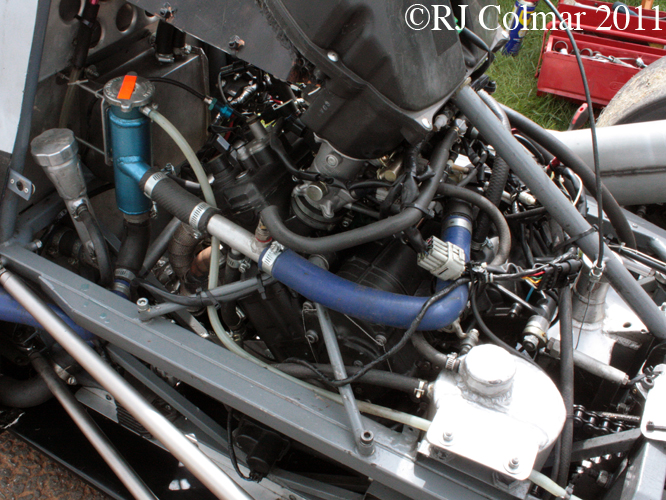
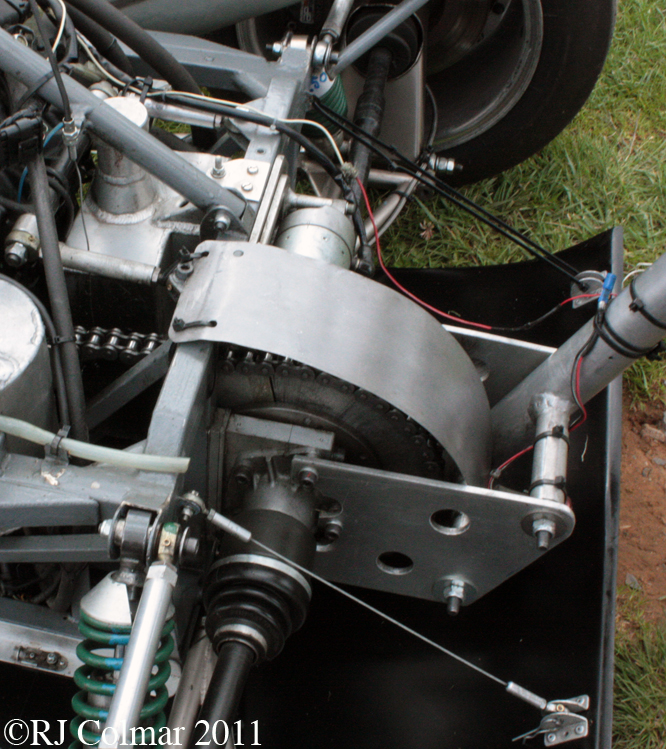
The Jedi Mk4 was designed by racer John Corbyn and built in Wellingborough to accommodate a variety of motorcycle engines, Arty uses a 1000 cc / 61 cui Yamaha R1 motor which produces 183 hp

Jedi Yamaha Mk 4, Castle Combe

that is transmitted to the rear wheels by chain drive.

Jedi Yamaha Mk 4, Castle Combe

Thanks to a high power to weight ratio, car and driver 400 kgs a potential acceleration time of 0 - 60 in under 3 seconds is possible,

Jedi Yamaha Mk 4, Castle Combe

Arty beautifully translated this potential into this memorable start at Castle Combe two weeks ago in which starting from 5th he led the opening lap

Jedi Yamaha Mk 4, Castle Combe

against faster Formula 3 cars with larger tyres and more powerful motors with ease during an all comers race.

Jedi Yamaha Mk 4, Castle Combe

The Jedi flew around the corners, Arty displaying masterful car control as it did so.

Jedi Yamaha Mk 4, Castle Combe

Unfortunately the giant killing act was judged to have been the result of a jump start and Arty's 10 second penalty became irrelevant after his engine grenaded, possibly the result of an oil leak during qualifying.

I look forward to seeing what Arty can do next time out which I hope will be next weekend at Castle Combe for the August Cup.

If you have an open wheel vehicle that can meet the 108db limit, and I have seen some 7 litre V8's and an 8.3 litre V10 meet that requirement recently, why not come along to Castle Combe and join in the fun. Should you looking be looking for a driver, you could do worse than give double Monoposto Champion Arty a call, he is certain not to disappoint.

My thanks to Geoff E, Simon Lewis and JMH of The Nostalgia Forum for coming up with additional details for today's post.

Hope you have enjoyed today's Monoposto edition of 'Gettin' a lil' psycho on tyres' and that you will join me again tomorrow. May the force be with you and don't forget to come back now !

Wednesday, 3 August 2011

Bi- Parting Tailgate - Volvo Amazon Estate / Station Wagon

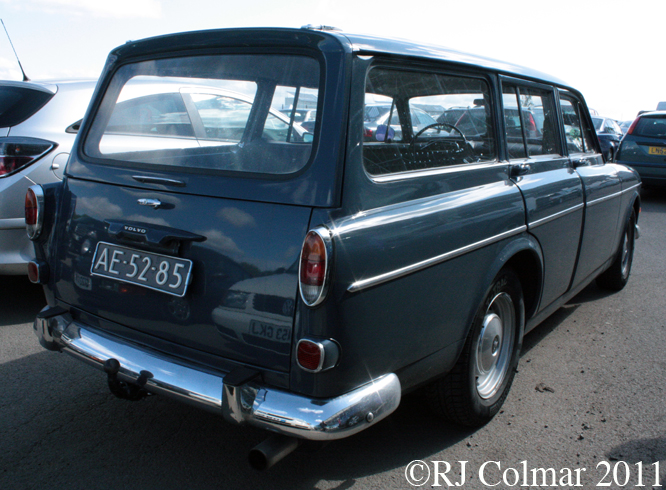
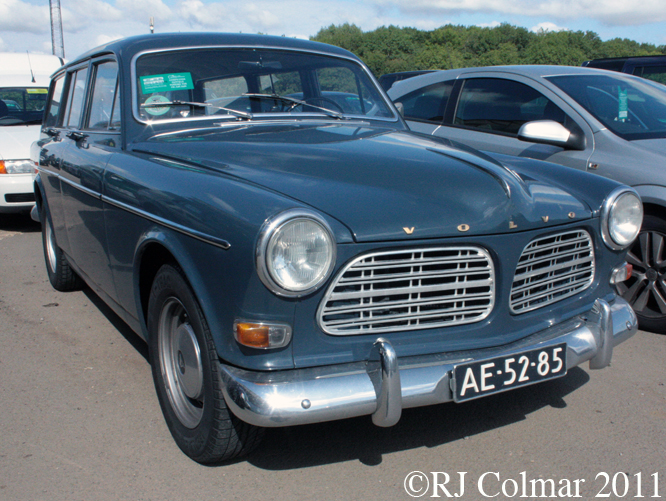
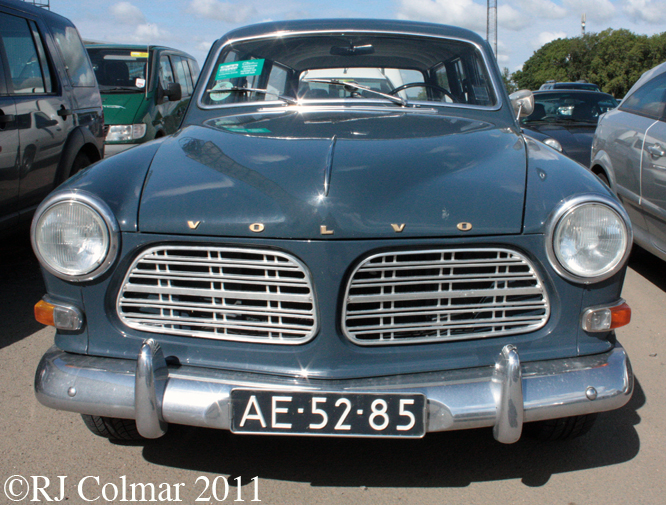
Last week I looked at the Volvo Amazon, no sooner had I written the blog than I came across this Estate / Station Wagon version with Dutch plates.

Volvo Amazon, Silverstone Classic

Unlike most modern vehicles of this type the Amazon had a two piece tailgate, the bottom half opens down to form a loading platform while the top half opens up a feature common to many US Estate Station wagons. Like the Mini introduced in 1959 the rear licence plate is conveniently hinged at the top so that one can carry longer loads with the tailgate down without attracting the ire of traffic law enforcement agencies.

Volvo Amazon, Silverstone Classic

The Amazon Estate / Station wagon was launched in 1962 seven years after the original Amazon Saloon / Sedan, and shared with it's 3 box sibling body work made of phosphate treated steel to improve paint adhesion and heavy use of undercoat and anti corrosive oil treatment.

Volvo Amazon, Silverstone Classic

Between 1962 and 1969 Volvo manufactured 73,000 Amazon Estate / Station wagons.

Thanks for joining me on this bi-parting tailgate edition of 'Gettin' a lil' psycho on tyres' I hope you will join me again tomorrow. Don't forget to come back now !
Tuesday, 2 August 2011

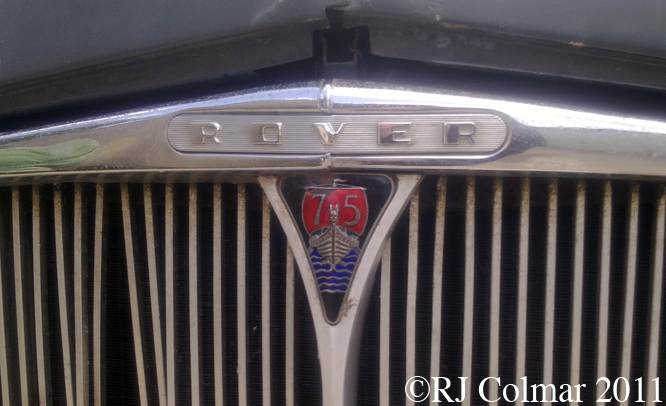
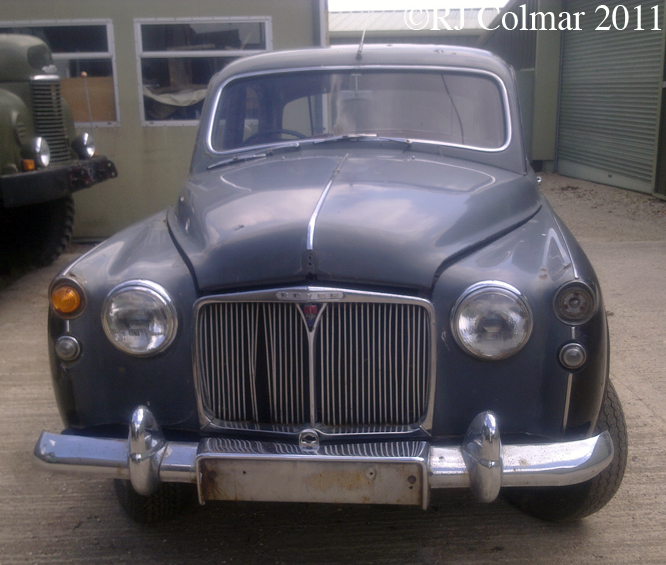
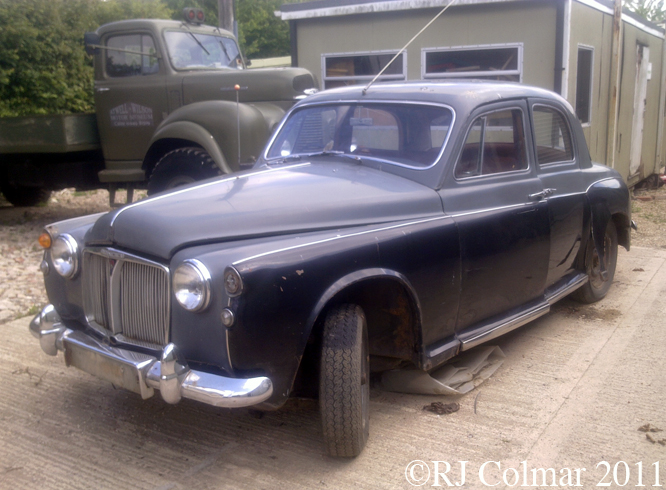
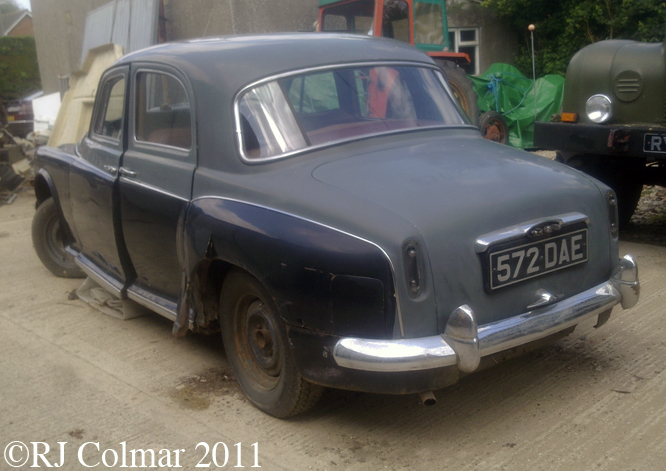
Awaiting TLC #2 - Rover 75 P4

The Rover P4 range of vehicles was introduced in 1949 to replace the interim out dated P3 vehicles which had been rushed into production in 1948 as the Rover company sort to rebuild itself as a vehicle manufacturer having spent the years during World War 2 manufacturing aircraft.

Rover P4 75, Atwell Wilson MM

Drawing inspiration from the 3rd generation Raymond Loewy designed Studebaker Champion launched in 1946, at the request of the Wilkes brothers who owned Rover, Gordon Bashford was responsible for what was known in the factory as the P4. The original P4's came fitted with a central spot lamp mounted in the grill, but this feature was dropped early in production which eased the difficulties keeping the engine cool.

Rover P4 75, Atwell Wilson MM

The P4 was continually being upgraded and from 1954 a distinct MkII version was available that was then restyled again into the form shown in these photo's in 1957, a Mk 2.2 if you will.

Rover P4 75, Atwell Wilson MM

Because of material shortages immediately after WW2 these vehicles incorporated a high percentage of aluminium content and were to be seen in competitions of the day including the 1955 Mille Miglia in which Lando Barsotti brought his #347 Rover 75 P4 in 271st. The 75 seen here was powered by a 2.2 litre /136 cui 6 cylinder motor featuring the same overhead inlet valves and side exhaust valve design as had been a feature of the earlier P3.

Rover P4 75, Atwell Wilson MM

The final MK II P4's were produced in 1959 with 9,974 Mk II's produced over it's five year production run.

I spotted this particular vehicle at the back of the Atwell - Wilson Motor Museum. I am not sure what they planned to do with it, good working examples of the type tend not to fetch more than £ 2000 so the cost of restoration would appear to be a little prohibitive.

Thanks for joining me on this Awaiting TLC edition of 'Gettin' a lil psycho on tyres', I hope you will join me again tomorrow. Don't forget to come back now !
Monday, 1 August 2011

Racing Maloo - HSV Maloo

Two weeks after starting the 'Gettin' a lil' psycho on tyres' blog I remember getting a huge thrill from discovering an HSV Maloo on the streets of Bristol and learning that it was the fastest pickup truck in the world.

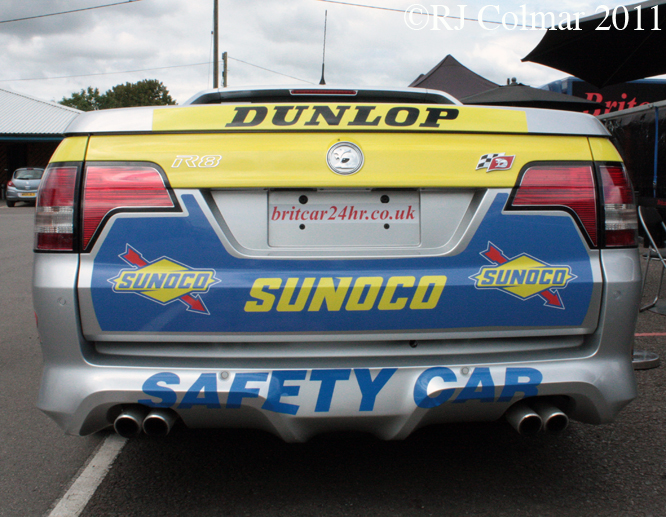
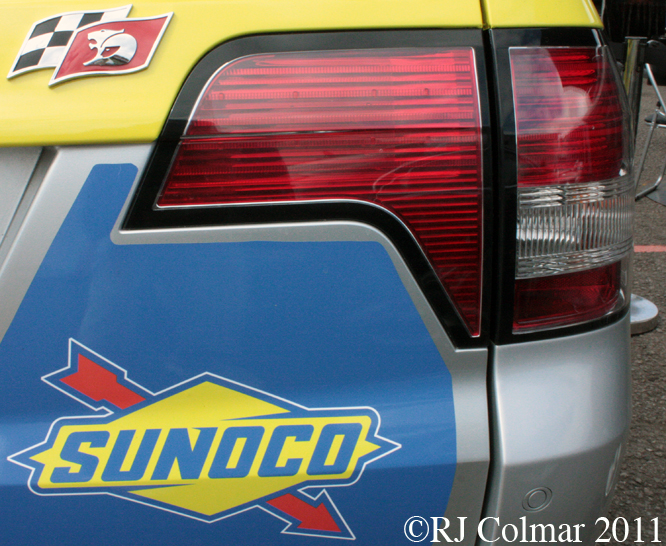
HSV Maloo R8, Castle Combe

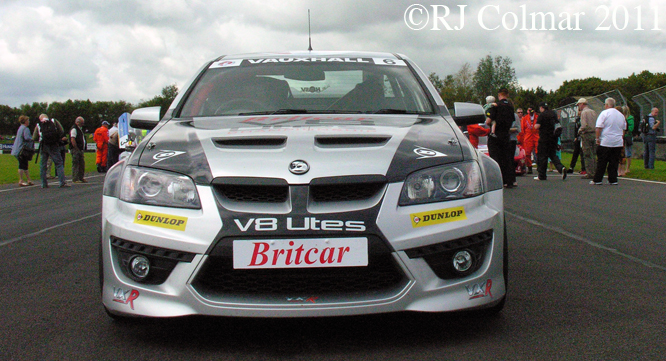
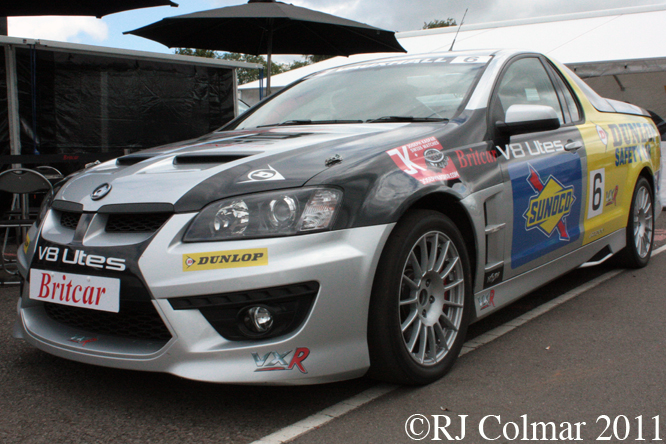
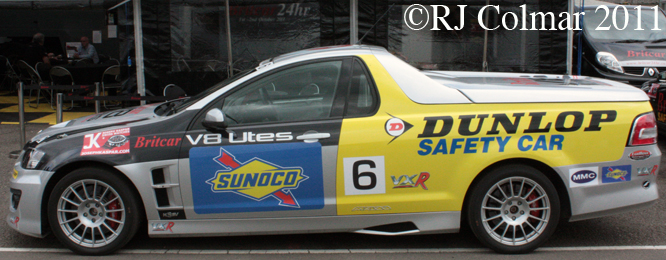
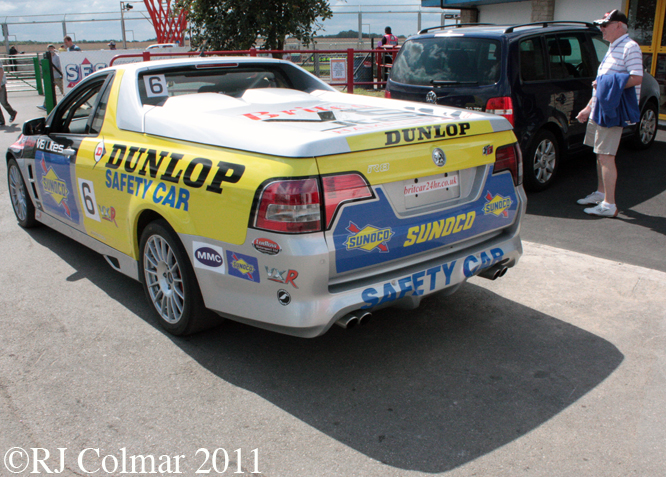
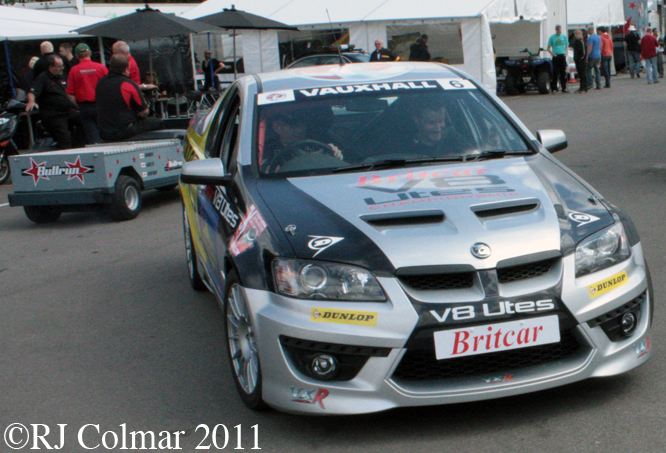
Last weekend while at the Britcar British Endurance Championship Racing Weekend at Castle Combe I stumbled across another Maloo this time in full race trim including

HSV Maloo R8, Castle Combe

slick tyres to compliment it's 400 hp Corvette LS2 engine which according to one passer by in a Britcar T shirt is tuned to 600 hp good for reaching 60 mph in under 4 seconds.

HSV Maloo R8, Castle Combe

When I got home I was surprised to learn that there is an Australian racing series for Ford and Holden pick ups, where pickups are known as Utes, which is part of a staircase to find talent for the top tier Australian V8 Supercar series.

HSV Maloo R8, Castle Combe

Even more surprisingly I have found out that late last year an announcement was made by Britcar to the effect that they would organise a debut season for a UK V8Ute Series using only the rebranded Vauxhall VXR Maloo pickup model.

HSV Maloo R8, Castle Combe

The cars were to be rented from Britcar with the rental cost including entry fees for a full season of races.

HSV Maloo R8, Castle Combe

The plan was that at each meeting the Maloo's would take part in three 40 minute races with mandatory pit stops for driver changes.

HSV Maloo R8, Castle Combe

The projected series is on temporary hold, I look forward to an announcement from Britcar that the series will get a chance to go public and from Vauxhall that the VXR Maloo gets the opportunity to enter the UK market place.

Thanks for joining me on this Antipodean Racing edition of 'Gettin a lil' psycho on tyres' I hope that you will join me again tomorrow ! Don't forget to come back now !

Sunday, 31 July 2011

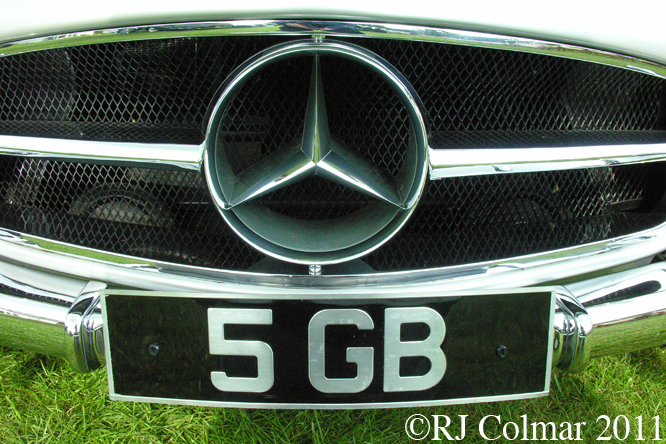
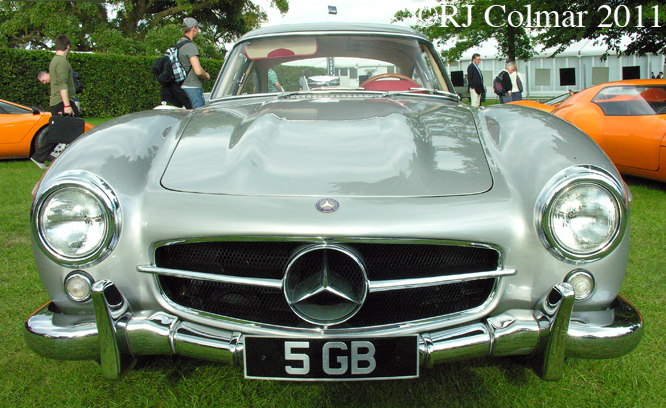
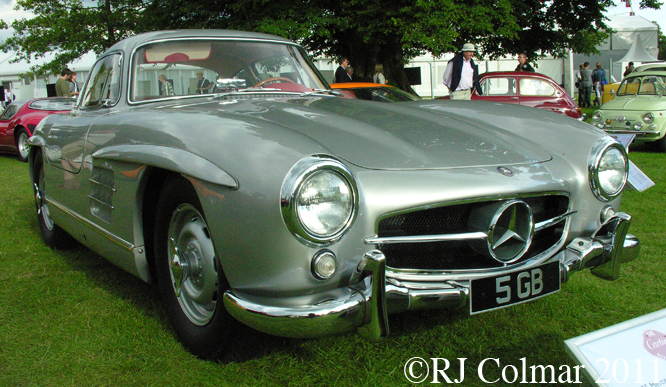
Direct Injection Of Kudos - Mercedes Benz 300 SL

In 1952 the underpowered 115 hp carburettor 3 litre / 183cui Sport Leicht Mercedes Benz W194 demonstrated remarkable versatility by winning the Le Mans 24 hours, the Eifelrennen sports car race at the Nurburgring and the Carrera Panamerica in Mexico racing against more powerful opposition from Ferrari and Jaguar.

Mercedes Benz 300 SL, Goodwood FoS

These successes lay in the lightweight tubular steel chassis and a low drag body which was facilitated by canting the straight six cylinder motor at a 50 degree angle.

Mercedes Benz 300 SL, Goodwood FoS

New York Mercedes distributor Max Hoffman suggested a road going version of the W194 would make a viable commercial impact in the United States and so the 300 SL was launched in 1954 with a the worlds first mechanical direct injection petrol engine which produced 175 hp.

Mercedes Benz 300 SL, Goodwood FoS

In order to accommodate the high sided tubular steel chassis, designed by Rudolf Uhlenhaut, distinctive aluminium gull wings were used in conjunction with a tilt away steering column to facilitate access.

Mercedes Benz 300 SL, Goodwood FoS

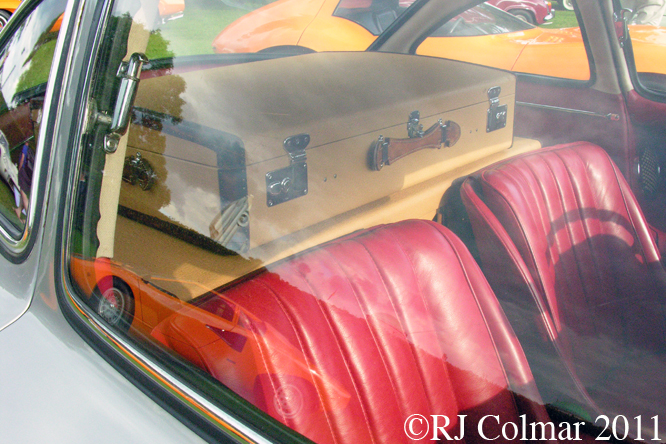
The spare tyre fills the boot / trunk space entirely meaning one had to travel light in the 300SL as demonstrated by the suitcase on the parcel shelf.

Mercedes Benz 300 SL, Goodwood FoS

The 300SL was not without problems derived from it's racing heritage the large volume oil system rarely got up to proper operating temperature on shorter journeys and in turn the oil would get diluted by the mechanical fuel injection by unburned petrol that remained in the cylinders when the engine was switched off. This meant that the 300 SL needed an oil change every 1000 miles.

Mercedes Benz 300 SL, Goodwood FoS

But for all of it's problems the aerodynamic shape of the 300 SL meant that with a 160 mph capability it was easily the fastest road car of it's day when it was launched. 80% of the nearly 1400 units built went to the USA changing the image of Mercedes Benz from staid to sporty overnight forever.

For a look at a contemporary interpretation of the 300 SL checkout Dave Wolin's wild Chevrolet powered 300 SL I blogged about a couple of weeks ago.

If your interested in the pre war silver arrows racing vehicles I strongly recommend a visit to Paul Chenard's Automobiliart website and check out his 'Silver Clouds' illustrated book of the 1934 Grand Prix season.

Thanks for joining me on this Direct Injection edition of 'Gettin' a lil' psycho on tyres' I hope you'll join me again tomorrow. Don't forget to come back now !
Saturday, 30 July 2011

The Lil' Car That Scared The Fat Cat - Doretti #1196

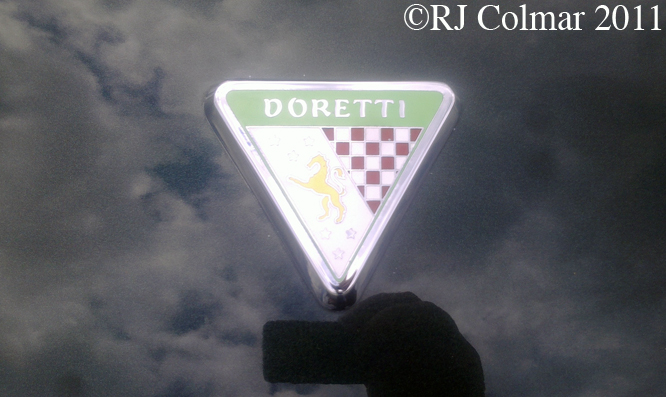
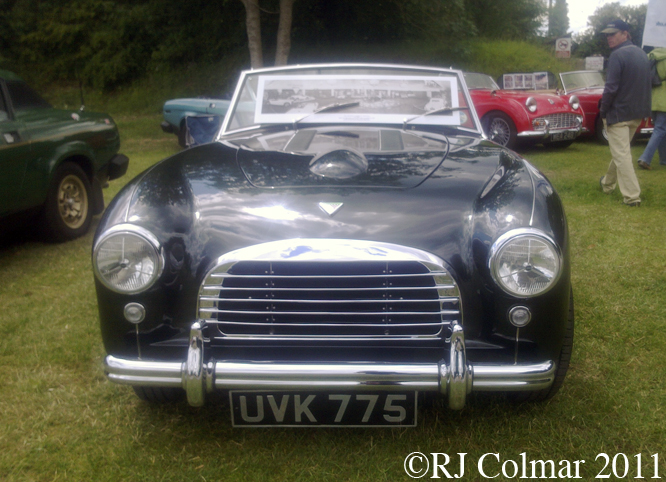
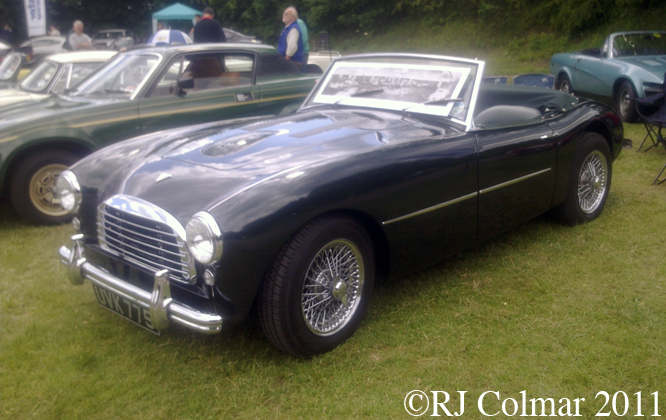
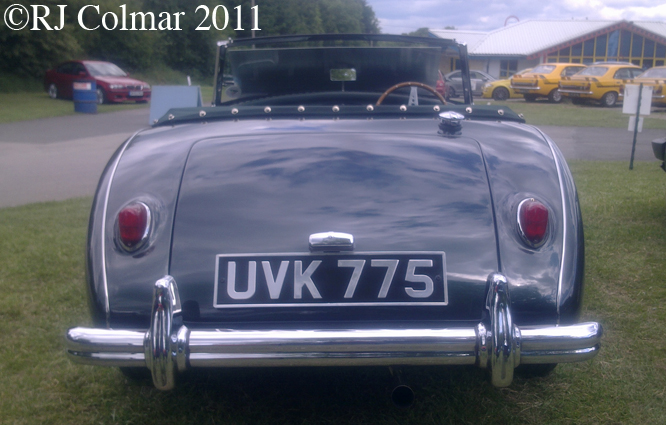
The Doretti was designed by former Bristol Omnibus apprentice Frank Rainbow while he was working for the Tube Investment Group. In January 1953 Frank was given 9 months to design and build the first Doretti car by Eric Saunders, managing director of the Swallow Coachbuilding Company which became part of the TI Group in 1946 after spawning S.S. Cars in 1934 which became Jaguar in 1945.

Doretti, Castle Combe C&SCAD

In 1952 Eric met Arthur Andersen of the Rome Cable Corporation, who was interested in the production of a vehicle specifically designed for sale in the USA and discussion turned to the production of a car to be designed by Frank with bodies to be made in Wales.

Doretti, Castle Combe C&SCAD

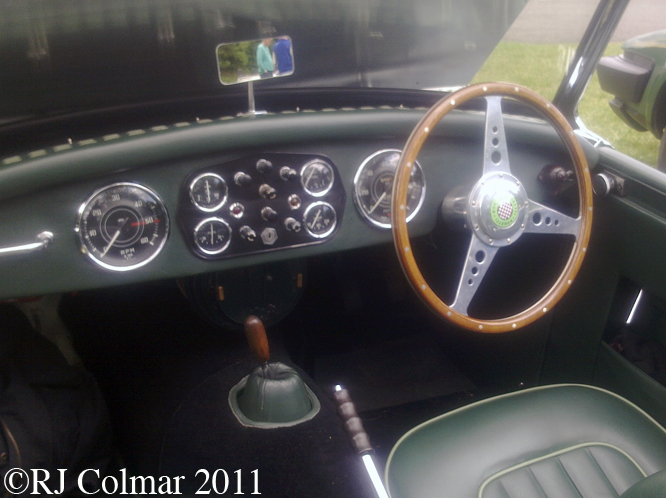
Using his connection with Sir John Black at Standard Triumph, Eric Saunders secured a supply of Triumph TR2 running gear for the Swallow Doretti, a name derived from a marketing company operated by Arthur Andersens daughter Dorothy Deen and Paul Bernhart which was to market the car.

Doretti, Castle Combe C&SCAD

Frank completed the first car with a Reynolds 531 chrome-molydenum steel tube chassis on schedule and it was exhibited alongside a Triumph TR2, which Doretti parent Cal Specialities Company was also responsible for distributing.

Doretti, Castle Combe C&SCAD

From 1954 to 1955 around 280 Doretti's were built in a factory with a maximum of just 18 employees.

Doretti, Castle Combe C&SCAD

The success of the Doretti frightened Jaguar, which was by now a large customer of the same TI Group that facilitated the birth of the Doretti, into giving Tube Investments an ultimatum to disengage from the Doretti project or loose the Jaguar account. Doretti production halted overnight on the receipt of the ultimatum and thus the Doretti name lives on in around 180 of the cars that are thought to have survived.

Hope you have enjoyed today's Cal Specialities Company edition of 'Getting a 'lil psycho on tyres' and that you'll join me again tomorrow for a look at another European sports car that changed the image of it's manufacturer forever. Don't forget to come back now !