Showing posts with label Alexander. Show all posts

Tuesday, 11 October 2011

English T Variations - Ford Model T

Ford Motor Company started manufacturing vehicles in 1903 and that same year three Model A's were exported to Great Britian, by 1909 the Ford Motor Company (England) was established and began working from an Office in London on March 8th 1911.

01 DSCN4072sc

Ford's first overseas assembly plant was opened in 1911 at Trafford Park in Manchester where Ford Model T's were assembled with imported chassis, mechanical parts and locally manufactured bodies. The 1911 Model T above has the distinction of being the first car to be driven up Ben Nevis.

22 year old Henry Alexander, on the instruction of his father the first Ford dealer in Scotland, spent six weeks preparing a route to the top Britains highest peak 4,409 ft / 1,344 m above sea level. It then took Mr Alexander 5 days to reach the summit along the precarious route he had prepared. Mr Alexander repeated the feat in 1928 and to mark Centenary of the Model T reaching the top of Ben Nevis, earlier this year a team of 71 volunteers carried a replica model T to the summit assembled it and then disassembled it and brought it back down again !

02 DSCN4075sc

Although the three pedal system for operating motor cars as used in most cars to this day was familiar when the first Model T's were built in 1908 the Model T relied on a hand throttle operated on the steering wheel a left pedal that when fully depressed engaged a low gear, when part depressed disengaged the gear box and when not depressed engaged a high gear. The centre pedal when depressed engaged reverse and the right pedal operated the brakes which were attached to the rear wheels only.

Above is a 1912 Landaulet offering minimal weather protection to the front seat occupants while giving the rear seat occupants a choice of protection thanks to a folding roof. The Landaulet body style was a hangover from the age of the horse drawn carriage and has largely disappeared only Maybach are known to offer a Landaulet option at the time of writing.

03 DSCN4098sc

When designing the Model T Henry Ford new that as well as a motor car he wanted his vehicle to be adaptable to the requirements of a great variety of users in agriculture and industry. Amongst the stranger applications of the Model T was the mobile aircraft starter version.

The long pole that extends beyond the front of this 1915 'Huck Starter' Model T can be aligned with the propellor shaft of an aeroplane and then engaged with it. The chain to the left of the operator connects the aeroplane starter shaft to the drive of the Model T which when engaged will rotate the aircraft engine until it fires under its own power.

04 DSCN4097sc

When production of the Model T started it took around 12 and half hours to assemble one. By the outbreak of the Great War in 1914 production time had been slashed to just 93 minutes , at one time nearly half of all the worlds motor vehicles were thought to be Fords, in the UK in 1919 41% of all new cars registered for the road were Fords.

The Model T was easily adapted into trucks and buses above is a 1923 fire engine that served on the estate of the Earl of Derbyshire from 1924 to 1948.

05 DSCN4069sc

One of the great myths about the Model T was that one could have a Model T any colour one wanted so long as it was black. In fact this was only true after 1914, up until then Model's T's were not available in black at all, from 1912 to 1914 Model T's were only available in Midnight Blue with black wings / fenders. After 1914 over 30 different black paints were developed to satisfy the various means of applying the paint to different parts of the cars.

The 1924 Model T above is little changed from the 1911 example seen at the top of the post.

06 Image4384sc

With over 15 million examples produced when production of the Model T ceased in 1927, the Model T held the title of the worlds most popular vehicle until 1972 when it was eclipsed by the VW Beetle, though it should be noted the Beetle had undergone many more changes in it's life time than the Model T.

The 1924 example above can be seen at the Attwell Wilson Museum.

Sunday, 17 July 2011

A Noble Effort - Hesketh Ford 308B # 308-2

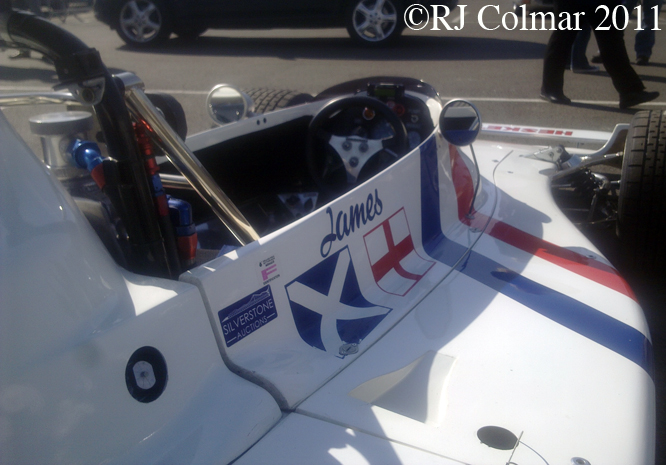
Mid way through 1972 James 'Hunt The Shunt' got fired by the STP March Formula 3 team for taking over a vacant seat with a rival team at Monaco after his own car had broken down and been hit by another car.

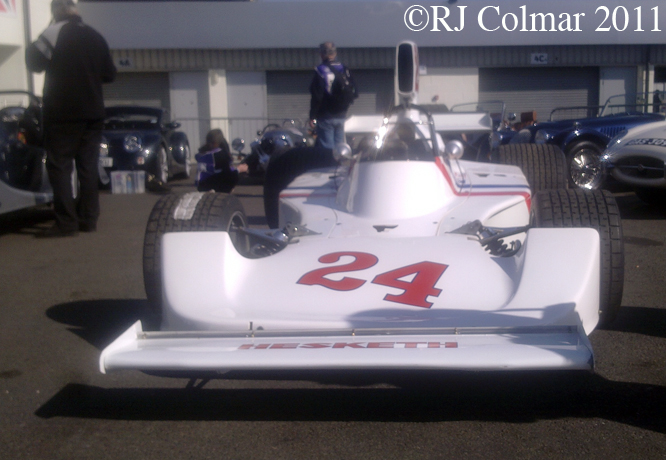
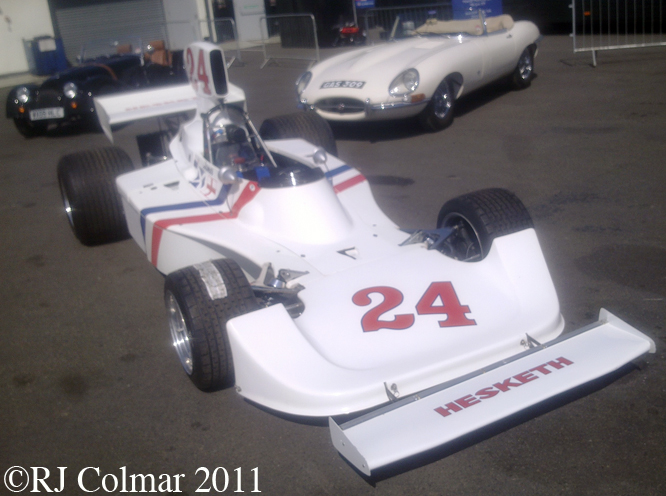
Hesketh Ford 308B, Silverstone

James found himself another ride with the ambitious Hesketh Team founded by Thomas 'Alexander' Fermor-Hesketh, 3rd Baron Hesketh, who inherited his title aged just four.

The Hesketh team were not experiencing much joy in the 2nd tier European Formula 2 championship and in a double or quits move Lord Hesketh decided that he may as well be loosing his fortune in the top tier Grand Prix Championship for the 1973 Season.

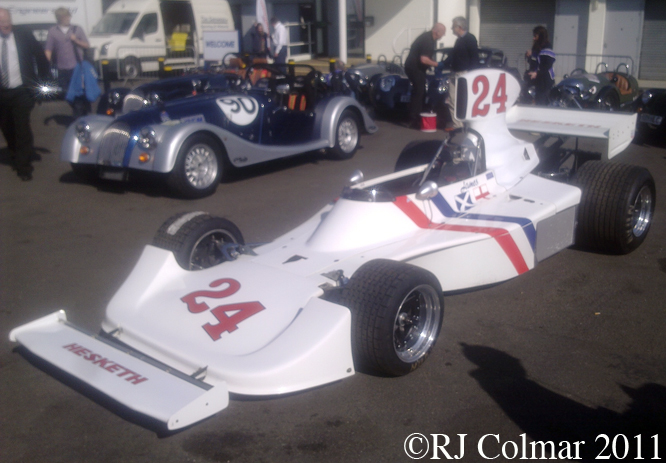
Hesketh Ford 308B, Silverstone

Things picked up rapidly as James quicky found his feet in Grand Prix racing, notably finishing second in the season ending US Grand Prix running Hesketh's March 731 engineered through the season by Dr Harvey Postlethwaite. The Hesketh team also brought a legendary ' joie de vivre' to the Grand Prix paddock.

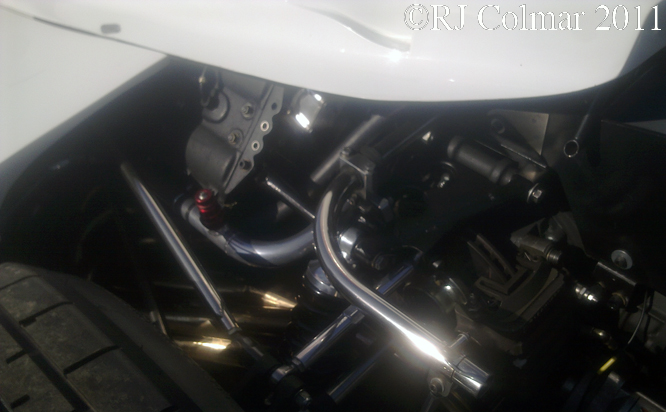
Hesketh Ford 308B, Silverstone

In 1974 Dr. Postlethwaite designed a new car based heavily on the March 731 from the year before. James in the new Hesketh 308 scored a debut pole position at the non championship 1974 Race of Champions ahead of the Ferrari's of Clay Regazzoni and Niki Lauda, and then came home first from pole in the non championship International Trophy at Silverstone.

For the rest of the 1974 season the teams effort suffered from poor reliability mixed with a couple of podium finishes enough for Hesketh to finish a credible 6th in the manufacturers championship and James 8th in the drivers championship.

Hesketh Ford 308B, Silverstone

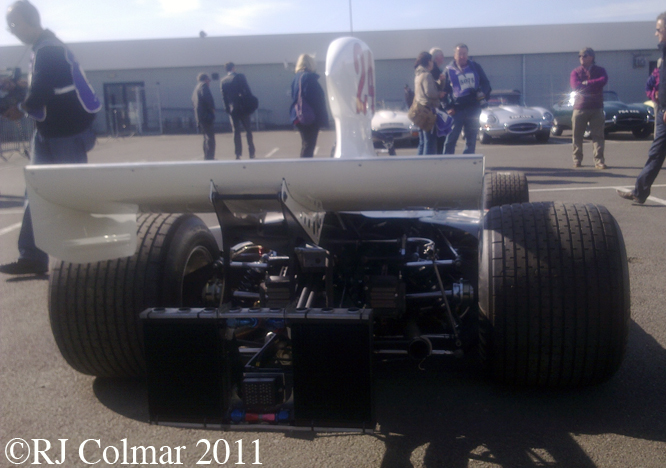
Lord Hesketh was adamant about not accepting sponsorship for his team and the cars were upgraded to 'B' spec for 1975, the front radiator was replaced by radiators mounted beneath the rear wing. The cars reliability was still less than stellar but when he could get across the finish line James always scored points and often podiums.

On the 22nd of June 1975 the team finally came good at the Dutch Grand Prix held on the drying Zandvoort circuit, after making an early pit stop for dry tyres James was able to leap frog leader Niki Lauda when he made his pit stop and held on to take the Hesketh teams only victory, the last ever by an unsponsored team.

Hesketh Ford 308B, Silverston

James finished an impressive 4th in the 1975 drivers championship and Hesketh 4th in the constructors championship. Alas the good Lord had to call time on his Grand Prix party for lack of funds and sold up at the end of the season Dr. Postlethwaite and his last Hesketh design 308C joined a partnership between Walter Wolf and Frank Williams, while James Hunt went and drove for McLaren and the remains of the Hesketh team using revised 308B chassis upgraded to 'D' spec continued to participate in the 1976 season under the direction of Bubbles Horsely the team manager.

US readers might remember the Hesketh team going out with a front page bang, in qualifying for the the 1975 James team mate Brett Lunger was launched into flight by a chicane kerbstone and a photo of the Hesketh crashing back to earth made the front pages around the world. Brett and the car recovered to make the start of the race but retired soon after.

Hesketh Ford 308B, Silverstone

The car featured in today's blog is the #308-2 chassis which James drove to victory in the Dutch GP. It was owned by Lord Hesketh until 2007 and was to be auctioned at the Silverstone Classic Auction next week however it has already been snapped up and sold by private treaty.

Hope you have enjoyed today's Nobel edition of 'Gettin' a lil' psycho on tyres' and that you will join me again tomorrow when I'll be taking a look at James Hunt's world championship winning car. Don't forget to come back now !