
Showing posts with label Leyland. Show all posts
Showing posts with label Leyland. Show all posts
Thursday, 31 March 2016


Tuesday, 13 September 2011
1977 ECotY - Rover Vitesse
There were not many four door executive vehicles that would look comfortable parked along side a Ferrari or Maserati in the 1970's but the Rover SD1 powered by the familiar alloy Buick derived V8 and designed by David Bache is certainly one that could keep such company in any car park and not look out of place.

Thanks in part to a painfully slow process of rationalisation that was occurring at British Leyland during the early 1970's involving many duplicitous departments and management within the nationalised organisation it took 54 months for the SD1 to move from drawing board to production.

David Bache was not in the least shy about his design influences incorporated into the SD1 including these indicator lights which are almost identical to those found on a Ferrari Daytona.

Built in a new purpose built £31 million factory in Solihull the SD1 was marketed as the Rover 3500 and launched in July 1976 to an ecstatic reception regarding the styling and performance, though the quality of some of the materials used and build were short of the market leaders particularly the emerging BMW brand. The deep front spoiler and BBS pattern wheels on this model signifies a later model in this case built in 1986.

The Vitesse badge hitherto associated with Triumph models belies the fact that the SD1 had technical and marketing input from the still separate and competing Triumph design and management offices. In late 1980 the Rover Vitesse, seen here at the Atwell Wilson Motor Museum, was introduced as the performance version of the Rover 3500 and the Vanden Plas the Luxury version that included leather seats.

While the styling of the SD1 was ahead of it's time the rear suspension was actually a technological step back from the de Dion suspension used on the previous Rover P6 to a live rear axle, though this made the cars easier and cheaper to build the move did not compromise the handling, much praised in the contemporary press, in anyway.

Since British Leyland had so many competing brands in its range the 1977 European Car of the Year award winner was not the money spinner that it should have been because it was priced so as not to compete directly with the Jaguar XJ6 against which it was seen in an extremely favourable light.
Thanks for joining me on the 1977 European Car of the Year edition of 'Gettin' a lil psycho on tyres', I hope you'll join me again tomorrow when I'll be looking at a fully loaded turbocharged competitor of the Rover SD1. Don't forget to come back now !
Thanks in part to a painfully slow process of rationalisation that was occurring at British Leyland during the early 1970's involving many duplicitous departments and management within the nationalised organisation it took 54 months for the SD1 to move from drawing board to production.
David Bache was not in the least shy about his design influences incorporated into the SD1 including these indicator lights which are almost identical to those found on a Ferrari Daytona.
Built in a new purpose built £31 million factory in Solihull the SD1 was marketed as the Rover 3500 and launched in July 1976 to an ecstatic reception regarding the styling and performance, though the quality of some of the materials used and build were short of the market leaders particularly the emerging BMW brand. The deep front spoiler and BBS pattern wheels on this model signifies a later model in this case built in 1986.
The Vitesse badge hitherto associated with Triumph models belies the fact that the SD1 had technical and marketing input from the still separate and competing Triumph design and management offices. In late 1980 the Rover Vitesse, seen here at the Atwell Wilson Motor Museum, was introduced as the performance version of the Rover 3500 and the Vanden Plas the Luxury version that included leather seats.
While the styling of the SD1 was ahead of it's time the rear suspension was actually a technological step back from the de Dion suspension used on the previous Rover P6 to a live rear axle, though this made the cars easier and cheaper to build the move did not compromise the handling, much praised in the contemporary press, in anyway.
Since British Leyland had so many competing brands in its range the 1977 European Car of the Year award winner was not the money spinner that it should have been because it was priced so as not to compete directly with the Jaguar XJ6 against which it was seen in an extremely favourable light.
Thanks for joining me on the 1977 European Car of the Year edition of 'Gettin' a lil psycho on tyres', I hope you'll join me again tomorrow when I'll be looking at a fully loaded turbocharged competitor of the Rover SD1. Don't forget to come back now !
Tuesday, 30 August 2011
Royal Tragedy - Rover P6 Series II 2200 SC
Some of you may remember I found a cut'n'shut Rover Series I P6 Cabriolet behind a hedge last year, today I am looking at the Series II P6 introduced in October 1970.

Initially the P6 Series II comprised exterior changes to the grill, plastic replacing alloy, rear lights and the instrumentation and switches of the two more expensive Twin Carburettor and 3500 versions.

From 1973 the Series II P'6s came in three flavours the 98 hp 2200SC, Single Carburettor, 115hp 2200, Twin Carburettor and 3500.

Production of the P6 ceased in March 1977 with 32, 270 units produced over four years. Allegedly the last 2200 model was a Left Hand Drive export model that was converted to Right Hand Drive by the Tourist Trophy Garage in Farnham.

British Leyland, the nationalised merger of large swathes of the British motor industry was entering it's worst period of industrial relations during the production of the P6 and this was reflected in abominable reliability issues, one driving organisation reporting that their 3500 P6 had required three engines, two gearboxes, two clutch housings and a wiring loom in 6000 miles motoring over 6 months and was off the road for 114 days out of the 165 days that it was tested over !

An attempt was made to export a high spec P6 to the USA but with less than 1500 units sold many of the cars built for the USA were eventually sold in Left Hand Drive European markets instead.

While driving her daughter Stéphanie home on September 13th, 1982, Princess Grace of Monaco, nee Grace Kelly, suffered a stroke which caused her to drive her P6 off the road. She never regained consciousness and died from her injuries the next day, while Stéphanie who fractured her neck in the accident, made a full recovery.
Thanks for joining me on this edition of 'Gettin' a lil' psycho on tyres', I hope you will join me again tomorrow. Don't forget to come back now !
Initially the P6 Series II comprised exterior changes to the grill, plastic replacing alloy, rear lights and the instrumentation and switches of the two more expensive Twin Carburettor and 3500 versions.
From 1973 the Series II P'6s came in three flavours the 98 hp 2200SC, Single Carburettor, 115hp 2200, Twin Carburettor and 3500.
Production of the P6 ceased in March 1977 with 32, 270 units produced over four years. Allegedly the last 2200 model was a Left Hand Drive export model that was converted to Right Hand Drive by the Tourist Trophy Garage in Farnham.
British Leyland, the nationalised merger of large swathes of the British motor industry was entering it's worst period of industrial relations during the production of the P6 and this was reflected in abominable reliability issues, one driving organisation reporting that their 3500 P6 had required three engines, two gearboxes, two clutch housings and a wiring loom in 6000 miles motoring over 6 months and was off the road for 114 days out of the 165 days that it was tested over !
An attempt was made to export a high spec P6 to the USA but with less than 1500 units sold many of the cars built for the USA were eventually sold in Left Hand Drive European markets instead.
While driving her daughter Stéphanie home on September 13th, 1982, Princess Grace of Monaco, nee Grace Kelly, suffered a stroke which caused her to drive her P6 off the road. She never regained consciousness and died from her injuries the next day, while Stéphanie who fractured her neck in the accident, made a full recovery.
Thanks for joining me on this edition of 'Gettin' a lil' psycho on tyres', I hope you will join me again tomorrow. Don't forget to come back now !
Monday, 25 July 2011
To Roll And Not to Rock - Silverstone Classic
Thanks to my friend Caroline lending me her Audi Convertible for one last time I managed to cram a substantial part of what was happening at the Silverstone Classic this weekend into just one 10 hour visit.
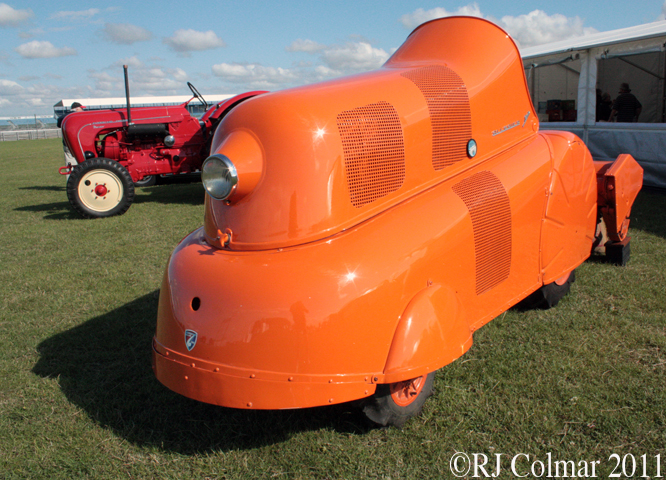
If you like discovering vehicles you never new existed the Silverstone Classic is just the place for you, amongst many vehicles I have never seen before are this streamlined Porsche 'Diesel' powered Allgaier agricultural vehicle.
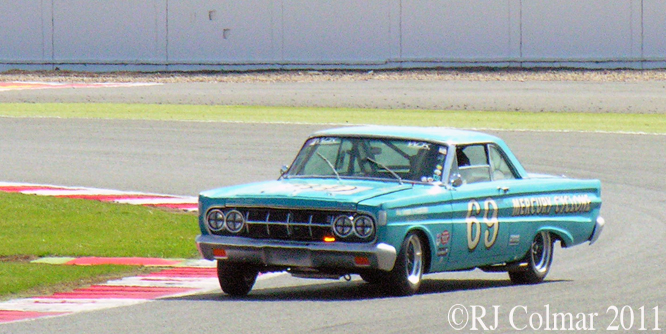
Unfortunately my visit coincided with qualification sessions only, Roger Willis, seen here, shared this Mercury Cyclone with 1966 British Saloon Car Champion John Fitzpatrick making a welcome change to a field dominated by Mustangs, Galaxies and a couple of Jags all of varying 1960's vintages.
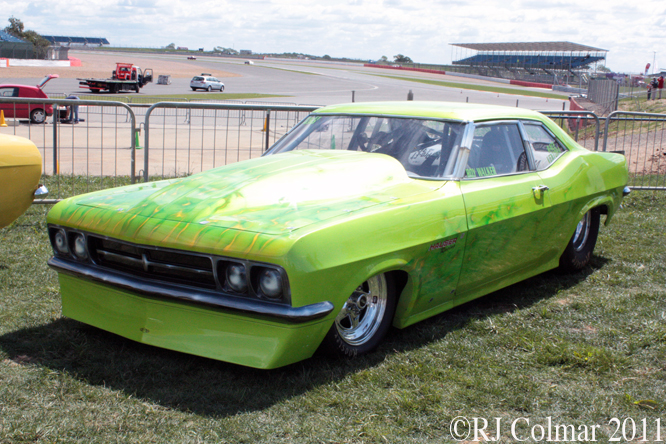
The Vauxhall Ventora on which this cut down funny car is loosely based was a 4 door saloon / sedan by a General Motors owned marque.
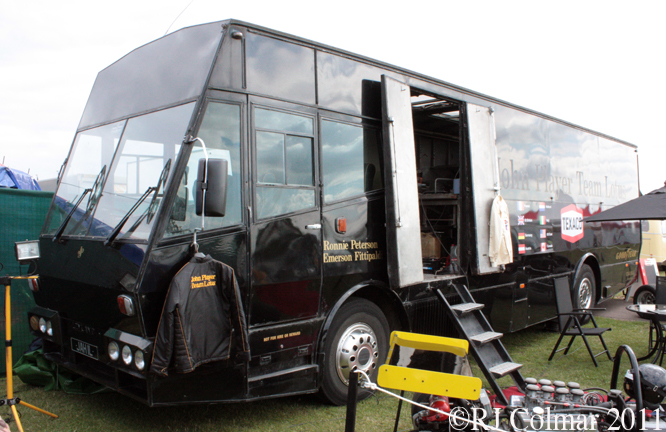
This well known transporter reg JAH 1L was in use by Team Lotus from 1973 until the 1980's is painted here in it's original 1973 John Player Special colour scheme.
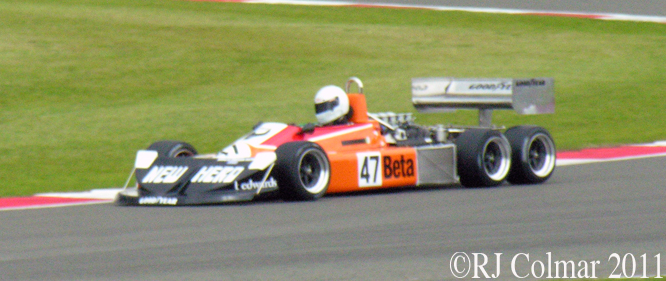
I was disappointed not to see the CGA Engineering March 761 out but this 1977 spec Formula 1 March 2 4 0 more than made up for it. Allegedly the car was built as a publicity stunt, it never raced but was used to good effect on hill climbing events.
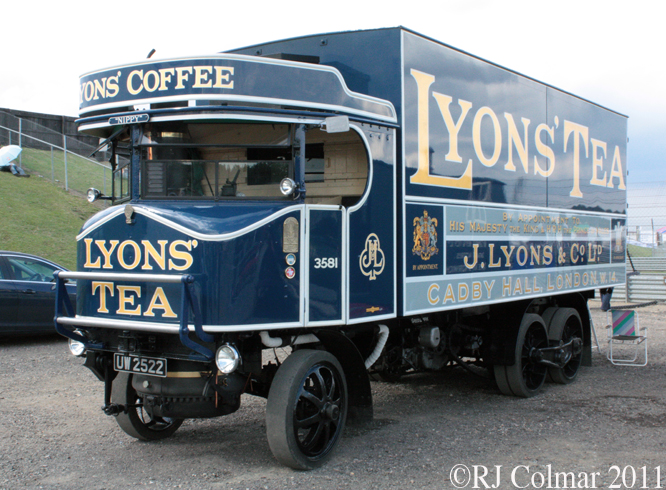
Six wheel vehicles, and steam powered vehicles were very much in evidence at Silverstone, found the idea of having this Sentinel steam powered truck delivering tea quite amusing.
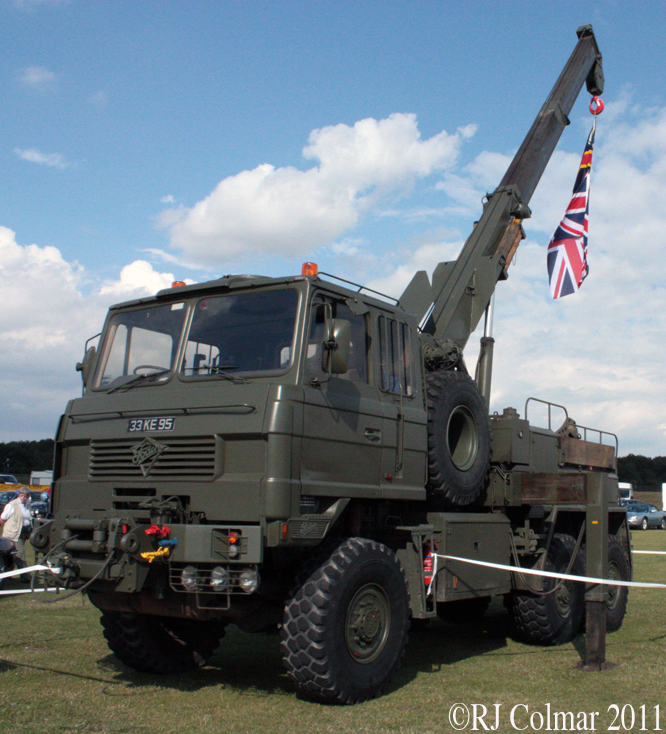
I believe the brave lads from the British Army had the tallest vehicle present, I believe this is a Foden 6x6 DROPS vehicle, the Foden marque has disappeared as has a significant contingent of the British Forces.
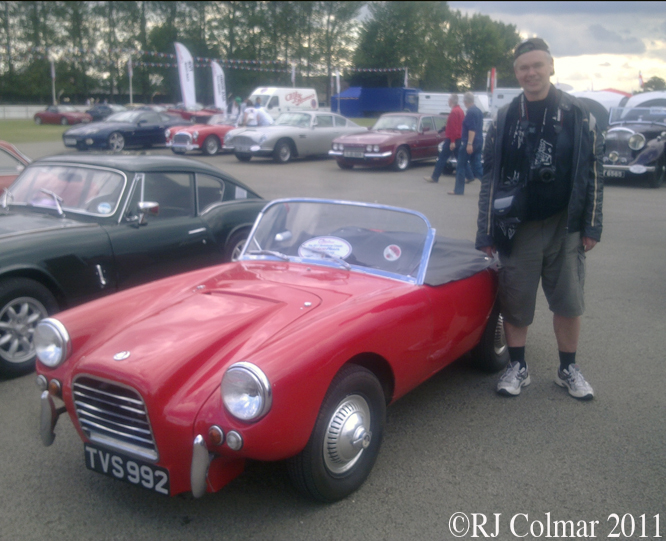
At the other end of the scale one of the smaller, electric kiddy Land Rover was the smallest , 4 wheel vehicles I saw was this 1959 Berkley.
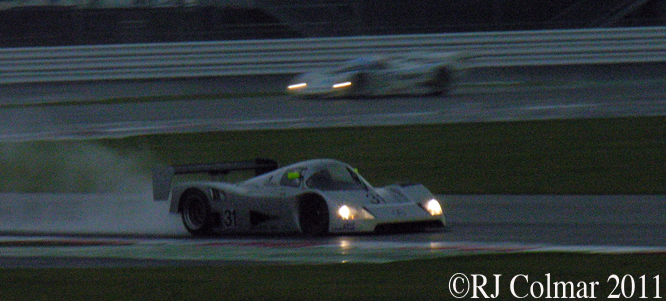
Rain added a little authenticity to the late Group C practice session which was only about 20mins long, I could have stayed out all night listening to the mighty roar that eminates from the Sauber C11 of Bob Berridge by far the best sounding and looking Group C ever IMHO.
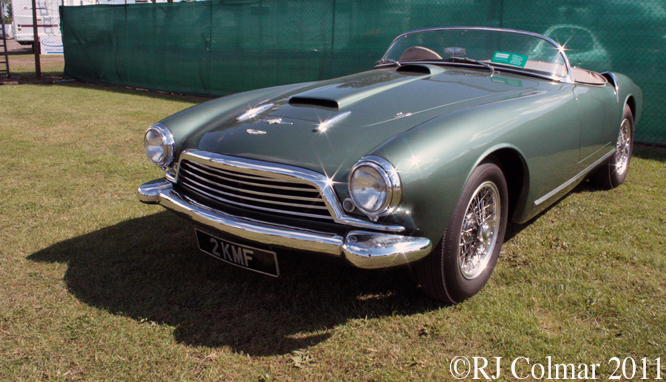
Car of the day for me was this 1953 Touring Aston DB2/4 I believe the RHD is a giveaway that this car was won by a Mr Smith who responded to a newspaper competition to sum up the cars design with a catch phrase.
Even if I had been camping I probably would have been too exhausted to catch the line up of tribute bands on the first night of the Silverstone Classic festival I guess all of my passion is focused on cars and very little of it on music.
PS It would appear NASCAR contractors who prefer to settle their differences in pit row rather than on track might want to take a leaf out of events that unfolded at the Silverstone Classic in the pit lane. See linked story by Tony 'Giraffe' Gallagher.
Thanks for joining me on another Classic edition of 'Gettin' a lil' psycho on tyres', I hope you will join me again tomorrow. Don't forget to come back now !
If you like discovering vehicles you never new existed the Silverstone Classic is just the place for you, amongst many vehicles I have never seen before are this streamlined Porsche 'Diesel' powered Allgaier agricultural vehicle.
Unfortunately my visit coincided with qualification sessions only, Roger Willis, seen here, shared this Mercury Cyclone with 1966 British Saloon Car Champion John Fitzpatrick making a welcome change to a field dominated by Mustangs, Galaxies and a couple of Jags all of varying 1960's vintages.
The Vauxhall Ventora on which this cut down funny car is loosely based was a 4 door saloon / sedan by a General Motors owned marque.
This well known transporter reg JAH 1L was in use by Team Lotus from 1973 until the 1980's is painted here in it's original 1973 John Player Special colour scheme.
I was disappointed not to see the CGA Engineering March 761 out but this 1977 spec Formula 1 March 2 4 0 more than made up for it. Allegedly the car was built as a publicity stunt, it never raced but was used to good effect on hill climbing events.
Six wheel vehicles, and steam powered vehicles were very much in evidence at Silverstone, found the idea of having this Sentinel steam powered truck delivering tea quite amusing.
I believe the brave lads from the British Army had the tallest vehicle present, I believe this is a Foden 6x6 DROPS vehicle, the Foden marque has disappeared as has a significant contingent of the British Forces.
At the other end of the scale one of the smaller, electric kiddy Land Rover was the smallest , 4 wheel vehicles I saw was this 1959 Berkley.
Rain added a little authenticity to the late Group C practice session which was only about 20mins long, I could have stayed out all night listening to the mighty roar that eminates from the Sauber C11 of Bob Berridge by far the best sounding and looking Group C ever IMHO.
Car of the day for me was this 1953 Touring Aston DB2/4 I believe the RHD is a giveaway that this car was won by a Mr Smith who responded to a newspaper competition to sum up the cars design with a catch phrase.
Even if I had been camping I probably would have been too exhausted to catch the line up of tribute bands on the first night of the Silverstone Classic festival I guess all of my passion is focused on cars and very little of it on music.
PS It would appear NASCAR contractors who prefer to settle their differences in pit row rather than on track might want to take a leaf out of events that unfolded at the Silverstone Classic in the pit lane. See linked story by Tony 'Giraffe' Gallagher.
Thanks for joining me on another Classic edition of 'Gettin' a lil' psycho on tyres', I hope you will join me again tomorrow. Don't forget to come back now !
Tuesday, 15 March 2011
Replica Rallysprint - Triumph TR7

The Triumph TR7 was manufactured from 1974 to 1981.

Works competition versions of the TR7 run by British Leyland from 1976 to 1978 were initially powered by the Dolomite Sprint 16 valve engine and later switched to the ubiquitous (in the UK) aluminium Buick derived Rover V8.

This is vehicle has replica paintwork of a Triumph works rally car registered OOM512M was used in the single stage 1978 Texaco Rally Sprint a staged for TV event run at at Esgair Dafydd, in Wales, won by Per Eklund in a later Triumph TR7 with Tony Pond coming second in the #6.

If the registration plates on this particular are original then this TR7 was first registered in Birmingham in 1976 and it is fitted with the later Rover V8 engine according to the records made available to me.
My thanks to Tim Murray and RS2000 at The Nostalgia Forum for their help identifying the event in which OOM512M ran.
Hope you have enjoyed todays Rallysprint edition of 'Gettin' a lil' psycho on tyres' and that you will join me again tomorrow. Don't forget to come back now !
Subscribe to:
Posts (Atom)